A garbage crisis is engulfing Havana as fuel shortages have brought state-run trash collection to a standstill, leaving residents to cope with mounting waste and unsanitary conditions.
Residents Struggle with Waste
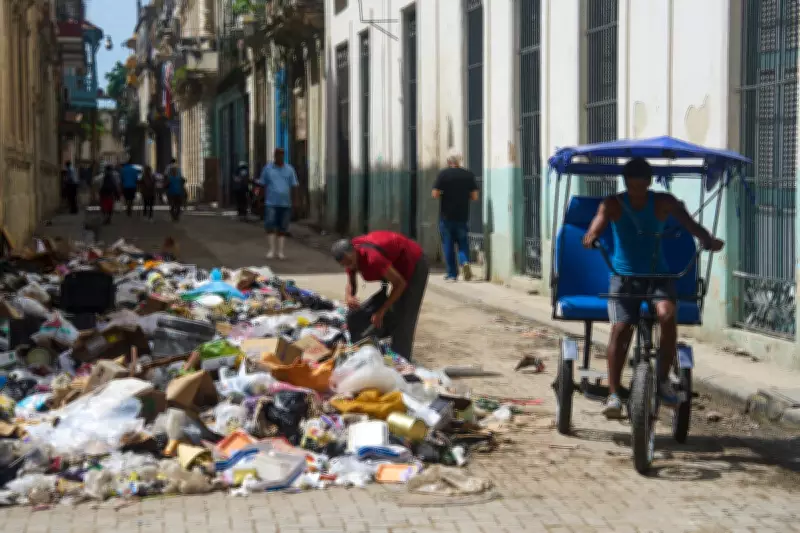
On a recent afternoon in Cuba's capital, temperatures rose and anxiety grew among residents of a Havana street. Their focus was an improvised dump site on the sidewalk filled with rotting food scraps, torn bags, cardboard, and rubble. Swarms of flies and stray cats gathered around the trash, whose stench wafted on the breeze from the nearby sea.
"What you're looking at is depressing," lamented María Odalys Ramírez, a 63-year-old who lives across from the iconic Hermanos Ameijeiras hospital. "The trash in this area, the flies, the rats, the filth — it's completely unsanitary."

For months, residents of Havana — home to 2 million of Cuba's almost 10 million people — have lived with piles of garbage accumulating on nearly every street corner. The situation deteriorated after a U.S. energy blockade triggered power outages, water shortages, and a fuel crisis that halted garbage trucks.
Health and Environmental Concerns
Without garbage collection, residents have begun burning waste in the streets, raising alarm among health officials over potentially toxic smoke. Residents fear the coming months will bring worse conditions as summer heat intensifies and hurricane season begins.
A citywide tour by The Associated Press revealed similar scenes across Havana neighborhoods, where locals said garbage trucks pass only irregularly. In the city center and outskirts, cars, bicycles, and pedestrians weave around trash piles, while others pick through them hoping to salvage something useful.
Havana as of last July was producing the equivalent of about 12 Olympic-sized swimming pools of solid waste every day, according to the latest municipal figures. Even then, municipal services collected just 57%.
Odalys Goicochea, an official at the ministry of science, technology, and the environment, said the "improper management of urban solid waste" has been identified as a primary environmental challenge in Cuba's national strategy. She warned that the current garbage collection situation, combined with rising temperatures and impending rains, could worsen the problem, as heat and moisture threaten to trigger a proliferation of disease-carrying flies and mosquitoes.
Citizen Initiatives Emerge
The crisis has sparked citizen initiatives to clean up neighborhoods. One such initiative is El Batazo, operating across eight Havana blocks. A collector rings a bell twice daily to pick up pre-sorted household trash, while other project members sweep the streets. Members then sell recyclable materials like aluminum and glass, repurpose food scraps to feed livestock, and place remaining trash into a container for later transport to a landfill.
"The fundamental impact of this project is proving to the community that it can be done," said Evelyn Martínez, a collaborator at El Batazo. "It is entirely possible to live in a cleaner environment, give value to what we call 'trash' and put it to good use."