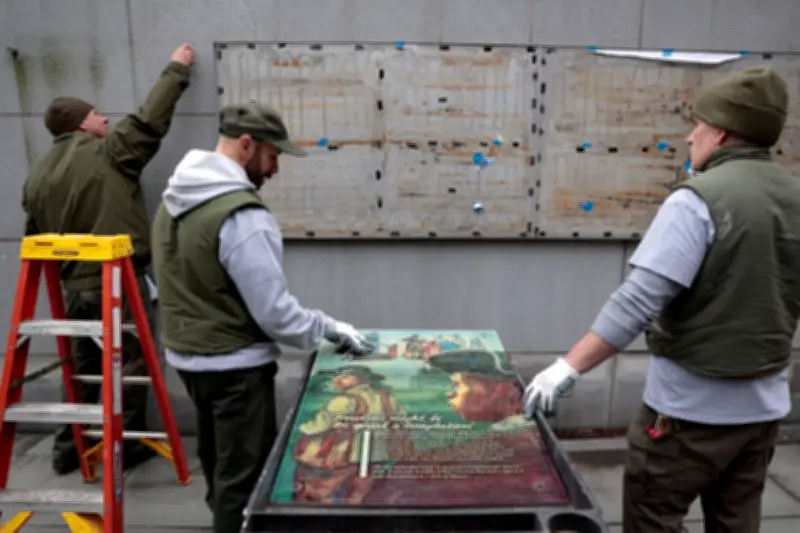
A US appeals court ruled on Thursday that the Trump administration does not have to reinstate materials related to climate change, immigration, and slavery that it removed from national parks. This decision marks the latest development in a legal battle over how history is remembered at American public monuments.
Background of the Removals
At the direction of President Donald Trump, the federal government has dismantled plaques and signage deemed to be “ideological indoctrination” over the past year. Trump characterized this as restoring “truth and sanity to American history” in a 2025 executive order. In May 2025, Interior Secretary Doug Burgum instructed the National Park Service (NPS) to flag for removal any images, descriptions, and narratives that “inappropriately disparages Americans past or living.”
Legal Challenge and Lower Court Ruling
The National Parks Conservation Association and the Association of National Park Rangers, among other advocacy groups, challenged the removals in court, filing a lawsuit in February against the Department of the Interior and NPS. In June, a US district court judge sided with the non-profits, ordering the federal government to reinstall any removed materials within 21 days. Massachusetts District Judge Angel Kelley stated that the White House’s actions “set a dangerous precedent of censorship and sanitization.”
Appeals Court Decision
On Thursday, a three-judge panel of the US Court of Appeals for the First Circuit overturned that order. The panel determined that the lower court erred in finding that the advocacy groups would suffer “irreparable harm” if the materials were not promptly reinstalled. According to the ruling, the district court’s determination that the Trump administration was erasing certain histories and degrading public trust did not amount to “any specific harms likely to be experienced by the plaintiffs.” The appeals court also noted that the non-profits did not present specific evidence demonstrating a link between Burgum’s mandate and their allegations of reputational harm and reduced membership.
Impact and Reactions
This ruling allows the Trump administration to continue its policy of removing materials from national parks that it considers ideologically charged. The decision has significant implications for how history and contentious topics are presented in public spaces. Advocacy groups expressed disappointment, while supporters of the administration praised the ruling as a victory for historical accuracy.