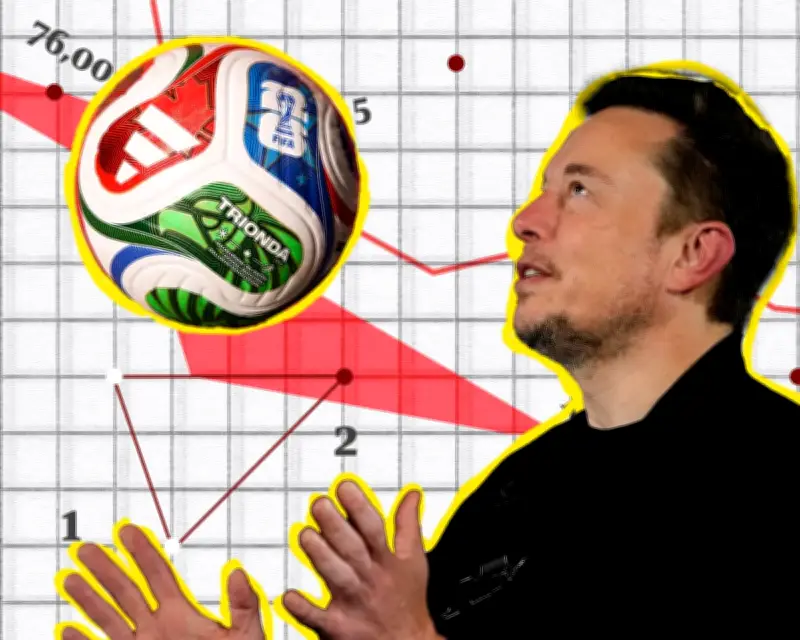
The World Cup and Elon Musk feature in this week's The Crunch newsletter.
The Crunch: Climate Refugees, Visualising Elon Musk's Wealth, and the Many Ways to Analyse the World Cup
Welcome to another edition of The Crunch! This week we have charts on football, soccer, and the beautiful game. Also featured are charts about Elon Musk and SpaceX, Australian house prices, ride-share bikes, and how to get really nice grass for playing football on.
How the US Is Shutting Out Climate Refugees
Donald Trump's immigration crackdown is largely targeting people from countries most vulnerable to displacement from climate-driven disasters, Guardian analysis shows. As the administration pushes policies to boost planet-heating fossil fuels, millions are forced to flee due to storms, floods, and droughts worsened by the climate crisis. Of the 39 countries from which the Trump administration has fully or partly restricted entry to the US, 22 are ranked within the most vulnerable quarter of nations to climate impacts, according to data from the Notre Dame Global Adaptation Initiative.

Four Charts from the Fortnight
1. Elon Musk Is Worth a Lot
To paraphrase Douglas Adams, Musk's fortune is big. Really big. It's difficult to comprehend $1tn. The ABC compares his fortune to other rich people, government spending, and the GDP of Taiwan. Mona Chalabi has also contextualised Musk's wealth with items like a piece of Toblerone.
2. That Is Because of SpaceX
Reuters examines the SpaceX IPO and how it smashed records. Interestingly, while SpaceX has a comparable market capitalisation to other tech companies, its revenue is much lower.
3. Even with a Small Drop in Prices, Housing in Australia Is Still Hugely Expensive
As columnist Greg Jericho shows, despite a dip due to interest rate increases, prices have a long way to go before homes become affordable. An average home would cost $592,500 instead of $1.1m if prices were relative to income as before the 50% capital gains tax discount.
4. How Much Public Space Do Ride-Share Bikes Take Up?
The People's Republic of Couch presents an interactive graphic on the public space taken by ride-share bikes in Sydney. After a recent secondment in London, Nick believes designated bike parking and geofencing are needed.
Bookmarks
- Pulisic and Balogun combine as the US beats Paraguay
- Countries with more bird species win more matches
- One goal, many journeys: Why the World Cup produces an ugly version of the beautiful game
- All-time greatest: highest goalscorer in World Cup history
- What network science can tell us about the 2026 World Cup
- How good are you at eyeballing numbers?
- Cutting firewood feels weirdly soothing
- Aunty Donna's Bandersketch!
Off the Charts
Reuters presents an excellent visual feature on making a world-class World Cup pitch, complete with cross-section illustrations of the playing surface.
If you would like to receive The Crunch to your email inbox every fortnight, sign up here.