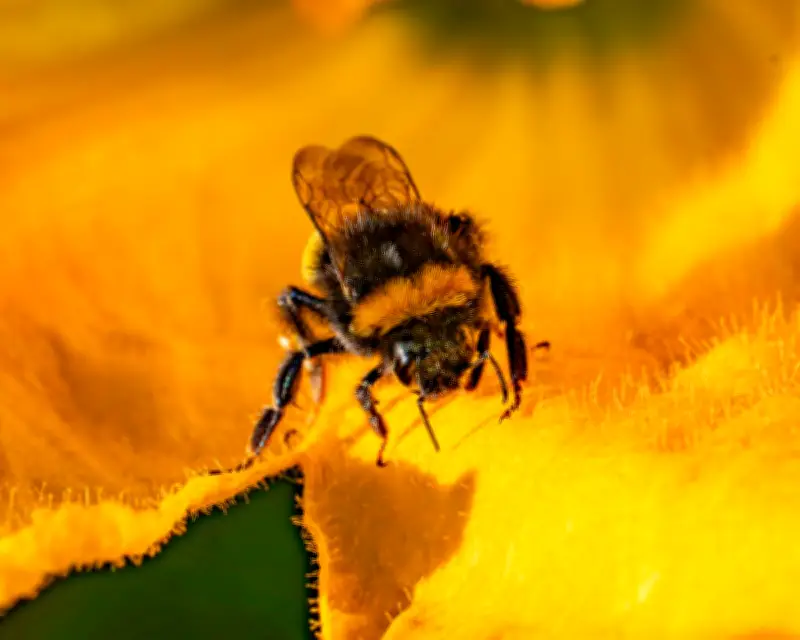
The UK government breached environmental law on several occasions when granting farmers permission to use a bee-killing pesticide, the Office for Environmental Protection (OEP) has found. In 2023 and 2024, the Department for Environment, Food and Rural Affairs (Defra) under the then Conservative government granted emergency authorisation to allow farmers to use a banned neonicotinoid pesticide on sugar beet crops.
Pesticide Toxicity and Impact
The pesticide, Cruiser SB, contains the active ingredient thiamethoxam. According to Prof Dave Goulson, a bee expert at the University of Sussex, one teaspoon of thiamethoxam is enough to kill 1.25 billion honeybees. The OEP, established after Brexit as England’s environmental watchdog, launched an investigation following a complaint by the campaign group ClientEarth.
Failures Identified
The OEP concluded there were failures to comply with environmental law on four occasions. These include a failure to consider the authorisation’s impact on protected sites, and to understand, avoid or mitigate the known risk of harm to those sites. Dr Doug Parr, chief scientist and policy director at Greenpeace UK, described the “absolutely shocking neglect from past governments” as having “deadly ramifications for our beleaguered wildlife”.

Government Response and Future Pledges
Since the OEP investigation launched in July 2024, the government has pledged to ban emergency authorisations for three banned neonicotinoids. However, not all neonicotinoid pesticides are banned. The government recently granted an emergency authorisation for a second spray of the neonicotinoid pesticide Insyst SG to control peach-potato aphid on sugar beet crops. Parr urged the government to “ban all pesticides of this kind” and provide farmers with “urgent support they need to move away from these chemicals and towards nature-friendly farming methods”.
Proposed Process Updates
In response to the OEP’s findings, Defra has proposed updating the assessment process for granting emergency authorisations to expressly recognise the relevance of potential impacts on protected sites. Kyle Lischak, head of ClientEarth UK, called this announcement a “huge step forward”. However, Jenna Hegarty, head of UK policy at the Nature Friendly Farming Network, warned the findings could damage confidence in the government’s commitment to transitioning to environmentally friendly farming. She stated: “It’s great we have the safeguards in place to catch this but for a sector that has had its trust shaken, to see the failure by the government to do things properly, I think it’s not going to engender the confidence we really need to see rebuilding in the sector.” The OEP will monitor the implementation of the updated process, which is due to be in place by November 2026. Defra has been approached for comment.