
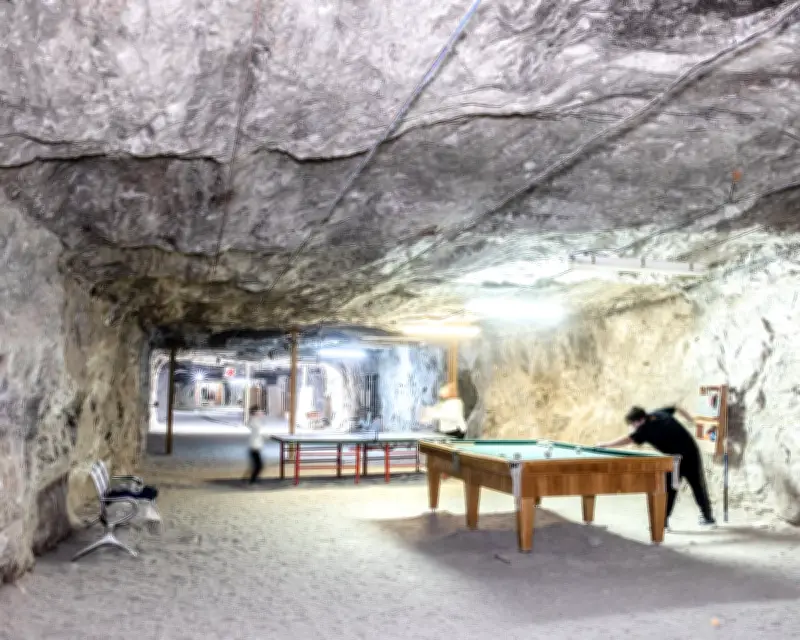
Deep underground in an active salt mine near Yerevan, patients spend six hours breathing salt-saturated air in the hope of easing respiratory diseases. The clinic, one of the world's only hospitals in a deep salt mine, is now on the brink of closure after Armenia withdrew state funding.
Since its opening in 1987, thousands have travelled to the Soviet-era Avan mine for speleotherapy, based on the belief that the allergen-free, salt-rich air can alleviate asthma, bronchitis, allergies and skin diseases. Mikayel Torosian, an asthma sufferer, said: 'I tried every possible treatment, and this is the only thing that worked. I thought it was complete rubbish before I tried it, but I am a true believer now. It saved me.'
A unique treatment under threat
The journey begins with a rattling industrial lift that drops patients 250 metres beneath a residential district. At the bottom, a maze of tunnels leads to cavernous chambers where patients nap on narrow beds, play billiards, do breathing exercises or sit in silence. Dr Anush Voskanyan, who has worked at the clinic since 1989, said the idea emerged after doctors noticed salt mine workers had unusually low rates of respiratory illnesses.
She attributes the health benefits to salt-rich air, year-round 19C temperatures, and the absence of allergens, pollution, noise and radiation. 'This is the perfect climate to live in. You basically don't age here,' she said. Patients typically undergo a three-week course, spending six hours underground daily. At its peak, the clinic admitted 60 people at a time; today there are often only five.
Funding cut in 2019
The clinic's fortunes changed in 2019 when the Armenian government withdrew state funding, arguing that speleotherapy lacked sufficient scientific evidence. Patients who once attended free now pay about £20 per session. 'We're on the brink of closing down,' Voskanyan said. 'We're still operating, but just barely, and could close any day.'
Despite decades of use across eastern Europe and the former Soviet Union, few large-scale studies exist, and most similar clinics have closed. Many respiratory specialists view speleotherapy as complementary therapy that may ease symptoms but should not replace conventional treatment. For supporters, patient testimony is key. Alvart Alihanyan, who has returned from Russia over 10 years, said: 'If it didn't help, I wouldn't be coming back.'
For now, each morning the lift continues its descent, offering patients hours of complete silence, no wifi, and a brief escape from the noise above ground.




