
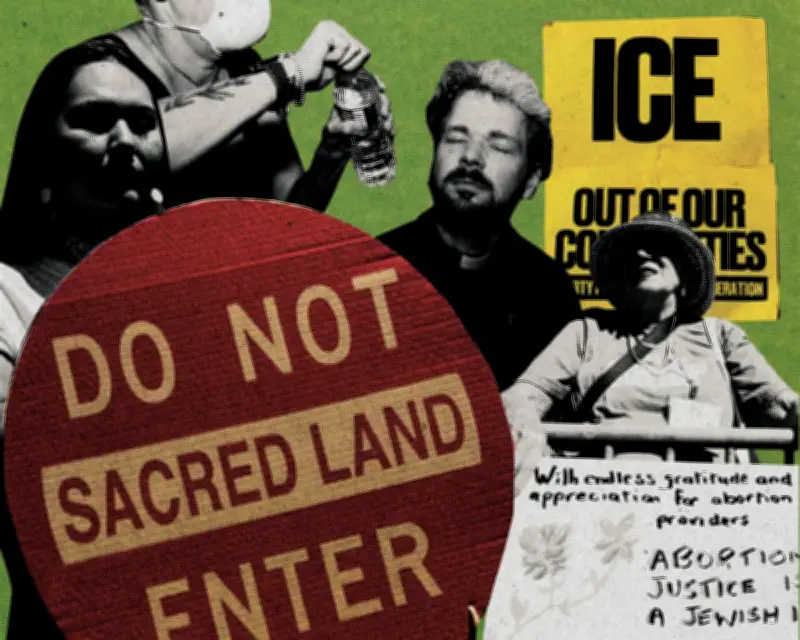
Progressive faith communities are increasingly leveraging religious freedom laws to fight for racial and social justice causes, mirroring the way social conservatives have used religious liberty to limit LGBTQ+ rights and contraceptive coverage.
Protecting Jewish Right to Abortion
Faith groups across the US south and midwest have filed class-action lawsuits to secure religious exemptions to state abortion bans. In March, an Indiana judge blocked the state's near-total abortion ban for plaintiffs whose religious beliefs conflicted with the law. The ruling came from a lawsuit by Hoosier Jews for Choice and five women of multiple faiths.
Elly Cohen, co-founder of Hoosier Jews for Choice, said laws restricting abortion violate Jewish law, which holds that life begins at birth, not conception. Cohen herself had an abortion in 2022 after finding the fetus had a severe chromosomal disorder. “Jewish law frames a hierarchy of whose life matters,” Cohen said. “The life of the living person takes priority over the fetus, which is not considered a life but rather a part of the mother.” The ban is blocked for now, but the Indiana supreme court will take up the case in September.
Resisting ICE Enforcement
Last February, dozens of Christian and Jewish groups sued challenging Trump's reversal of a “sensitive locations” policy that shielded houses of worship from ICE enforcement. A year later, a judge blocked warrantless enforcement actions near some churches involved in the litigation. “For us, terminating the policy is a fundamental attack against the religious freedom of our members and our churches,” said Rev Carlos Malavé, president of the Latino Christian National Network in Texas. Fear of ICE raids has caused a sharp decline in attendance, affecting congregations' morale and financial health.
Protecting Native American Sacred Sites
Indigenous activists in Arizona have used religious freedom law to fight for access to Oak Flat, a sacred mountain transferred to a mining company. Wendsler Nosie, a San Carlos Apache tribe member and leader of Apache Stronghold, said Oak Flat is where rituals like the Na‘ii‘ees ceremony take place. “To make the American people who come from across the ocean understand, it’s the same magnitude as taking the Bible, burning it and plowing down Mount Sinai,” Nosie said. The supreme court dealt a blow last year by refusing to consider a lower court ruling that cleared the transfer, but the group continues to fight.
Opening Harm Reduction Sites
Safehouse, a Philadelphia non-profit, has been in a legal battle with the US justice department over opening a safe injection site. The organization, whose board includes faith leaders, argues it has a religious right to prevent opioid overdoses based on Judeo-Christian beliefs. An appeals court ruled last year that the religious freedom law applies to non-religious entities, allowing Safehouse to proceed with its claim.
Combating Mandatory AI in the Workplace
In May, Pope Leo XIV warned that artificial intelligence threatens human dignity and workers' rights. A month later, Erin Maus, a North Carolina software engineer, secured a religious exemption from using AI to write code, arguing AI tools cause environmental and ethical issues that violate her Unitarian Universalist faith. The Unitarian Universalist Association has said technological advances should be “guided by an ethical understanding of humanity”.




