Prestwich's recurring sinkholes are the result of the town being built on sand combined with leaky sewers, according to Labour councillor Alan Quinn, the former cabinet lead for environment, climate change and operations.
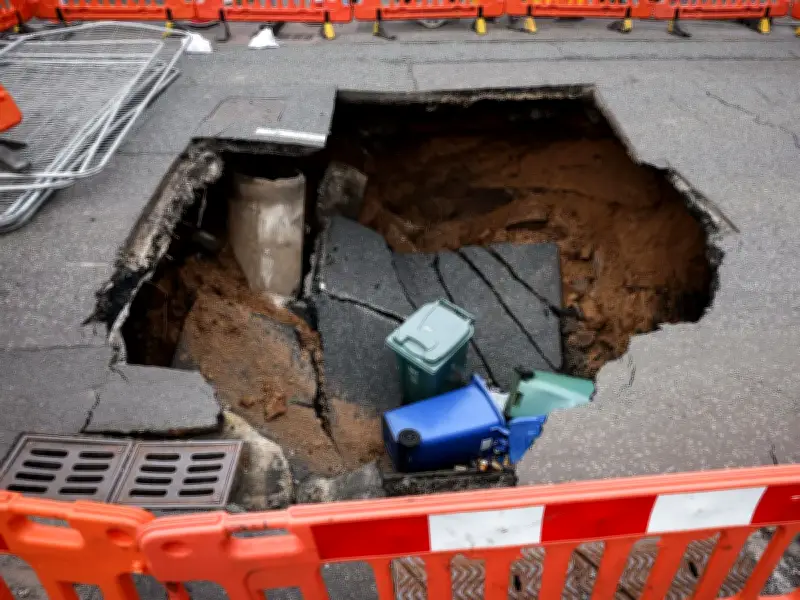
The most recent incident came last week when a large stretch of tarmac in Heywood Road dipped alarmingly. Residents placed bins around the hole, which was later cordoned off by Greater Manchester Police. United Utilities said the road stability had failed due to a sewer collapse, with repair work scheduled 'for the foreseeable future'.
A history of collapses
This is not the first time a sinkhole has opened in Prestwich, or even in Heywood Road itself. Last year, Bury New Road was partially closed by a road collapse that came just five days after a sinkhole opened near Whittaker Lane Primary school.
In July 2023, Heywood Road crumbled again, swallowing residents' bins. The street also saw a spate of smaller incidents near its junction with Bury New Road that year. In 2021, the Heywood Road and Bury New Road junction was closed for two days, with further sinkholes occurring in 2017 and 2016.
Why Prestwich is prone
Councillor Quinn told the Manchester Evening News: "The problem we've got in Prestwich is Prestwich is built on sand, and if you do get a water leak, the sand is washed away. Then you get a cavity, then you'll get a collapse."
He noted there have been possibly five incidents on Heywood Road due to a steep slope down to Heys Road, where fast-running water can wash sand away. "When you dig Prestwich up, all you see is sand," he added.
United Utilities backed this explanation, with a spokesman saying the town's 'sandy ground conditions can cause movement', placing 'additional pressure on the sewer network, especially in areas with high volumes of traffic'.
Solutions and council response
United Utilities said it is taking a 'proactive approach to future proof' the sewer network to avoid further incidents, including lining parts of the sewer system. The liner adds strength to the pipes while allowing flexibility in softer ground, and these stretches have no joints, providing fewer places for failure. This work has been completed along 'large sections' under Heys Road, and following the latest incident, the company decided to extend the works by a week and line another section.
A Bury council spokeswoman said investigations, including surveys in the Heywood Road area, identified issues with the underlying sewer infrastructure, which is the responsibility of United Utilities. Where defects are linked to the sewer network, United Utilities carries out repairs and covers the costs. The council incurs costs in making areas safe, deploying staff, managing traffic and road closures, and communicating with residents and businesses.
The spokeswoman added: "We understand that these incidents and resulting road closures and traffic management causes disruption to residents and businesses which is why the council continues to work closely with United Utilities and other partners to ensure the causes of these incidents are fully investigated and that any necessary remedial works are carried out as quickly as possible to minimise disruption."