
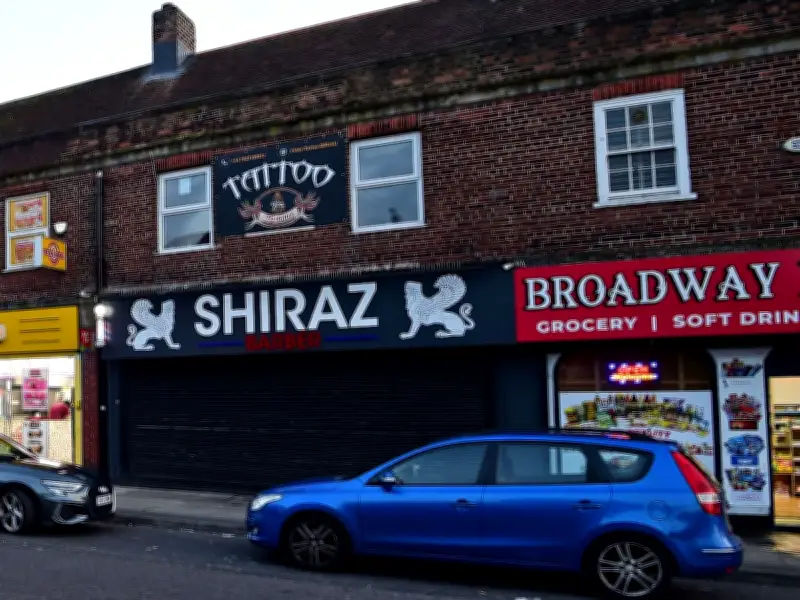
Liverpool needs to avoid a “race to the bottom” with high streets dominated by takeaways and betting shops, according to the city’s new 15-year plan. The plan sets out the challenge of redesigning district centres as the population could grow beyond half a million by 2043.
New policies to reshape high streets
Liverpool City Council’s local plan, expected to be adopted in 2027, will introduce changes to limit hot food takeaways, betting shops and student accommodation. Councillor Nick Small, cabinet member for growth and economy, said residents “constantly” tell the council they do not want the creep of hot food takeaways in their areas.
“The high street is undergoing massive changes in Liverpool and across the country and some of that is because of Amazon and people getting more deliveries,” Small said. “I think the high street does have an optimistic future, high streets are going to have to curate an experience. It’s about creating an experience people choose to come to, what we’re trying to do on this isn’t a race to the bottom, it’s not just about late night takeaways and about some of those usages that people constantly tell us they don’t want in high streets and is crowding out investment into other more productive things and being able to encourage that.”
Limits on takeaways and betting shops
Under the new policies, no more than 10% of units in district, local or neighbourhood centres such as Walton Vale, Breck Road or Tuebrook can be hot food takeaways. At least two non-food units must be between individual or groups of takeaways, and they must be more than 400 metres from schools. Takeaways outside Liverpool city centre would not be allowed to open past 11pm.
Cllr Small said: “It’s about listening to what came back from the engagement work we did, particularly around the concentration of food and drink and hot food takeaways which is an issue right across the city with high streets.”
Councillor Sam East, whose ward covers Rice Lane, said residents would benefit from the changes but warned: “Reducing empty shop fronts is encouraging but we have to do better than endless vape shops, convenience stores and takeaways.”
Additional measures target betting shops and adult gaming centres. New permissions will only be granted if they do not create a cluster of shops or contribute to health deprivation, including poor health linked to gambling. Small said: “That’s something we’ve campaigned a lot on in Liverpool, we are going as far as we can on that public health agenda, I think this is something that is really significant for Liverpool.”
HMOs and student accommodation
The local plan also addresses houses in multiple occupation (HMOs), children’s residential care homes and purpose-built student accommodation. Small said: “On houses of multiple occupation, children’s residential care homes, purpose built student accommodation, we are trying to give back powers to communities to protect the existing residential amenities in those communities. Children’s residential care homes are an emerging issue in many parts of the city and what we’re trying to achieve is the wellbeing of children at the forefront of that and we are placing homes in areas that support the wellbeing of children and community cohesion.”
Council leader Liam Robinson previously said the city was going to “war” against HMOs. Data from the authority’s Labour group shows 260 applications for such homes have been rejected since 2021. The policy changes aim to limit HMOs to 10% of neighbourhood areas, retain family dwellings and prevent homes being “sandwiched” by shared occupancy properties.
Community concerns
Michelle McGinn, a resident of Second Avenue in Fazakerley, told a council meeting about the impact of HMOs. She said: “Our avenue’s always been a community and this is now being lost. Residents won’t sit in their back gardens anymore in their own homes because they’re being overlooked by the massive extensions built on HMOs.”
She added that rubbish was thrown from windows and bins were misused. “These houses have six residents in at the minute, well they’re supposed to, but we know there’s more than six in some of them. Does anyone even check?” McGinn said out of 46 homes, four were HMOs and residents were becoming “unhappy and wanting to leave the area”.
“The residents change regularly, they change all the time. The family homes are just being lost and converted into HMOs. They’re never going to be family homes again, this is supposed to be a family area, we’ve got primary schools, secondary schools, parks and lots of things for families to do but they’re not going to want to live here anymore.”
Neighbour Claire Green said the community was under threat from the “sheer density” of HMOs, with the area reaching a “tipping point” and a “devastating impact” on daily life. She added: “Our street which we used to take pride in has been turned into a virtual construction site. Heavy machinery, skip after skip, and poorly managed renovations have damaged pavements, left numerous potholes and coated our cars and windows in layer upon layer of dust and debris. No-one is cleaning it up and no-one is taking responsibility.”
Councillor Hetty Wood, the city’s lead for housing, said earlier this month: “We know residents have genuine concerns about the impact of poorly managed HMOs in some neighbourhoods, particularly where family homes are being converted without the right checks and permissions. That is why the council has strengthened its work in this area, including more intelligence-led enforcement, additional housing enforcement capacity and a wider review of how HMOs are managed across the city. HMOs must be properly regulated, safe for tenants and managed in a way that respects surrounding communities. The council has already strengthened procedures following previous cases where planning status had not been verified before accommodation was used, and work is under way to improve cross-service checks and due diligence.”




