
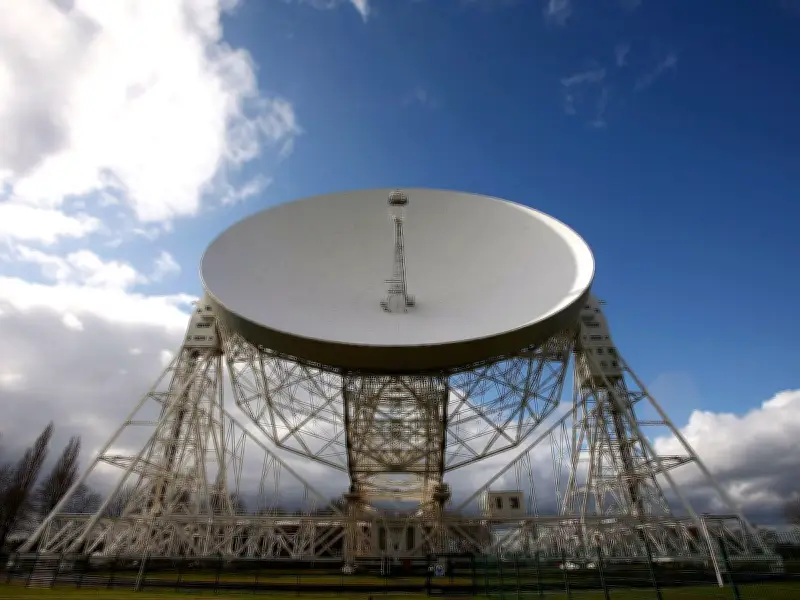
The Jodrell Bank Observatory in Cheshire, home to the iconic 250ft Lovell Telescope, is set to close after the UK Research and Innovation (UKRI) agency announced funding cuts. The decision has drawn criticism from scientists who argue it undermines the UK's ambition to be a science superpower.
Historic Observatory Faces Axe
Established in 1945, Jodrell Bank pioneered radio astronomy and played a vital role during the Cold War by monitoring Soviet missiles for NATO. It also contributed to the US Space Race effort. The Lovell Telescope is the third largest steerable radio telescope in the world. The site earned Unesco World Heritage status in 2019 and has appeared in science fiction shows such as The Hitchhiker's Guide to the Galaxy and Doctor Who.
Sue Ferns, deputy general secretary of the Prospect trade union, said: “Jodrell Bank is not just an iconic site in UK science in the North West of England, it is a facility that underpins our world leading research capabilities. Closing it would be a tragedy that undermines the mission for the UK to be a science superpower.”
Closure Date and Impact
The observatory will close on 1 April 2028 unless alternative funding can be found. Prof Simon Garrington, associate director of Jodrell Bank Observatory, told BBC News that everyone there was “devastated” by the decision. He added: “It's not just because of the fantastic science that we do, but Jodrell Bank and its telescope network have been a national capability for nearly 70 years and a beacon for science in the north-west [of England], attracting young people into science and engineering careers.”
The UKRI is making 2.7% cuts to astronomy, nuclear and particle physics research over four years to trim its £10 billion budget. It plans to end the £2.8 million Jodrell Bank budget, citing escalated research costs for physics and lab operations. Twenty-eight jobs are at risk, and the closure could affect the work of around 3,000 scientists.
UKRI Defends Decision
Prof Michele Dougherty, executive chair at UKRI, said: “After listening to our community we have protected core discovery research. However, the situation does require some tough, but necessary, decisions. These are never easy choices, but we have made what we feel are the right decisions to bring... a sustainable financial position by 2029/30.”
The Jodrell Bank leadership team plan to challenge the decision while seeking alternative funding to keep the Lovell Telescope operating in some form.
Scientists and Physicists React
Paul Howarth, president of the Institute of Physics, said: “These cuts will come as a terrible blow to the scientific community and do real damage to the UK's reputation as a place to research and innovate. Despite reassurances, physics has not been protected, crucial facilities remain under threat and jobs are being lost. Scientific capability that has taken years to build up is being put at risk by these decisions. They also threaten the future of one of the greatest symbols of physics in the UK - the iconic radio telescope at Jodrell Bank.” He urged the new government to review the decisions.




