Hounslow Council is behind on 80 per cent of the measures needed to meet its ambitious 2030 net zero target, raising fresh doubts over whether the west London borough can become carbon neutral within four years.
Council documents show a series of flagship climate projects have stalled or fallen behind schedule, despite the authority declaring a climate emergency seven years ago.
Climate Emergency Declaration and Progress
The council, currently led by a minority Labour administration, declared a climate emergency in 2019 and adopted a climate action emergency plan five years later. But one year on from its “refreshed” action plan, 80% of its policies are off track.
Its ambitious net zero target is 20 years ahead of the UK Government, which is aiming for the country to effectively be carbon neutral by 2050. There is a right-wing movement attempting to push back against net zero policies, which critics claim could stunt economic growth and lead to higher bills.
That is despite the UN warning recently, ahead of the major global Cop31 environmental conference taking place in Turkey this week, that the world will overshoot the key climate threshold of 1.5C warming above pre-industrial levels, beyond which extreme weather events is likely to become more intense and frequent.
Decarbonising Council Buildings and Homes
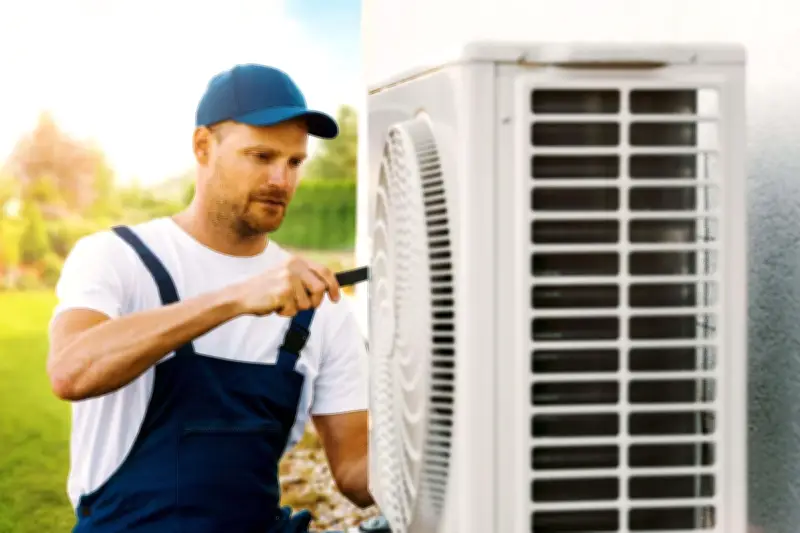
In west London, the net zero pledge at highest risk of not being delivered is Hounslow Council’s aim to decarbonise the council’s entire operational estate. The authority’s target includes replacing inefficient gas boilers with heat pumps, installing solar panels and installing energy efficacy measures.
However, only one of the council’s 37 buildings has been decarbonised, with this section of the project rated “high risk” because “the funding required to deliver decarbonisation of council operations to achieve net zero by 2030 is significant, and not currently identified or available”. A further 29 assets have been partially decarbonised, and seven have not been decarbonised at all.
Hounslow has also committed to decarbonising 16,000 council-managed social homes by 2030. Progress on the move stalled this year, with only 150 homes fully decarbonised, and no further homes decarbonised in 2026. To meet this 2030 target, the council would have to undertake work on more than 5,200 homes a year. But council documents indicate that “limited further progress” is anticipated in 2027.
Vehicle Fleet and Charging Points
Despite falling behind on housing, the council said it is on track to decarbonise all schools by 2030, even though it fully decarbonised only one school in 2026. The council said it will “continue to replace fossil fuel heating systems to increase the number of fully and partly decarbonised schools”.
The local authority outlined an objective to transition away from fossil fuel-powered vehicles to ultra-low emission versions in its fleet. The council owns 492 vehicles, of which 359 are diesel or petrol-powered, and 133 are hybrid or zero emission.
The council failed to meet its electric vehicles charging points target of installing 2,000 by 2026. When adopting policies to transition to cleaner energy, the council viewed hydro-treated vegetable oil as an alternative for diesel while waiting for battery charging infrastructure to develop. In 2026, zero transitions were undertaken, and electric vehicles account for just over 2% of the fleet.
The borough has committed to install 2,000 electric vehicles charging points by 2026 but the target has been missed. Town hall leaders have halved the target and extended the deadline to 1,000 charging points by 2030. The council said the target was not achieved due to procurement delays and resourcing challenges.
Future Plans and Political Scepticism
The council has set out a number of plans for the next 12 months in a bid to get its net zero 2030 target back on track. This includes the decarbonisation projects at five leisure centres, along with Hanworth Air Park, Isleworth Public Hall and Cranford Library.
In August, opposition Conservative and Reform councillors in Hounslow appeared to voice scepticism that there is a climate emergency. During the record-setting heatwave in August, Tony Brown, leader of Hounslow Reform, reposted tweets that said “climate emergency is a big hoax”, and Tory Darshan Nagi described climate change as a “natural process”.