
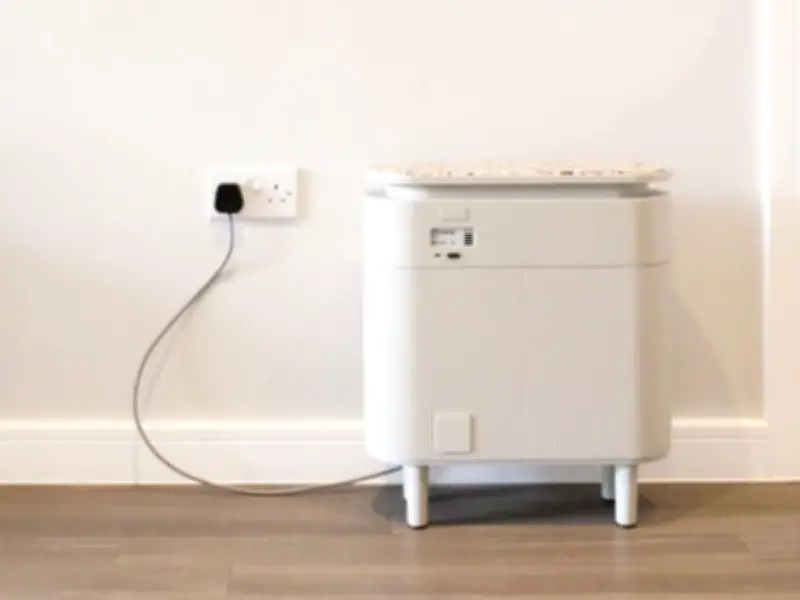
Households could be given free plug-in batteries to help cut energy bills under a range of options being explored by the Government.
Plug-in batteries work a bit like a power bank, in that they let you store up excess electricity. The idea is you store up power when demand is low, and therefore cheaper, and then use this energy later when prices are higher.
How plug-in batteries work
Energy costs are typically highest during weekday evenings when more people are home and using power. Plug-in batteries plug into a normal wall socket and then discharge energy back through the socket.
They come in a range of sizes, with smaller ones being the size of a microwave or printer, to larger ones that can take up the same space as a washing machine, and cost from around £500.
Government proposals
The i Paper reports that the Department for Energy Security and Net Zero (DESNZ) has drafted a proposal which would see the Government bulk-buy the devices for low-income homes.
Plug-in batteries were said to have been among a list of options drafted earlier this summer under the former energy secretary Ed Miliband’s Warm Homes Plan.
A government source told the newspaper that plug-in batteries were seen as “attractive” because “they’re so easy to deploy” - but any decision whether to go ahead would be down to the new Energy Secretary, Miatta Fahnbulleh.
Regulatory challenges
Plug-in batteries are not currently permitted as existing wiring regulations require devices sending power into the grid to be installed on a dedicated circuit.
This means DESNZ would have to conduct a safety study and then update the regulations, which means it would take some time for any potential rollout to be approved.
DESNZ confirmed to the Mirror that its current focus is on rolling out plug-in solar panels, which will be legally available from August 27, 2026. Government research estimates that they could save the typical UK home between £70 to £110 a year on their energy bills.
A spokesperson said: “We’ve cut VAT on electricity to give families breathing space. The Energy Secretary’s focus is working to bring bills down for good. And we are rolling out plug-in solar, which will be quickest to reach the market – helping to bring bills down for good.”
Other energy-saving schemes
Households in England or Wales who want to replace their existing gas, oil or electric boiler with a heat pump or biomass boiler can currently get £7,500 towards the cost thanks to a Government scheme.
Or if you're on a low income and have an energy performance certificate (EPC) rating from D to G, you might be eligible for a home upgrade grant. This is designed to help with the cost of making your home more energy efficient, such as wall, loft and underfloor insulation, installation of an air source heat pump and solar panels.




