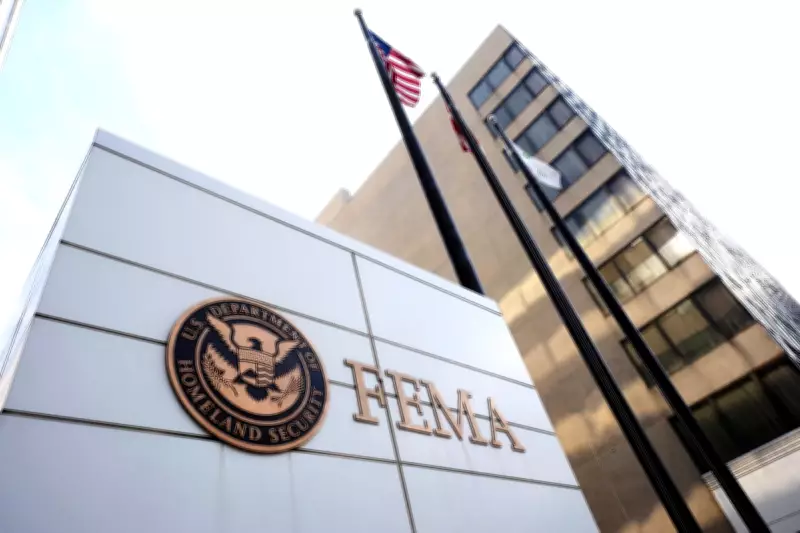
FEMA Resumes Major Resilience Grant Program After Court Mandate
The Federal Emergency Management Agency (FEMA) has officially reopened applications for its Building Resilient Infrastructure and Communities (BRIC) grant program on Wednesday. This action comes less than three weeks after a federal judge ordered the agency to restore the program, which had been canceled last year.
$1 Billion Available for Disaster Preparedness
FEMA will make $1 billion available through the BRIC program, which assists states, local governments, territories, and tribal nations in undertaking projects to strengthen infrastructure against natural hazards. These hazards include wildfires, floods, earthquakes, and hurricanes.
"When done correctly, mitigation activities save lives and reduce the cost of future disasters," stated Karen S. Evans, FEMA's acting leader, in an announcement regarding the program's resumption.

New Rules Shift Responsibility to States
While the funding restoration provides crucial assistance to many regions, FEMA has implemented new rules that align with the Trump administration's policy of increasing state responsibility for disaster management. These rules include discontinuing funding for hazard mitigation planning and non-financial direct technical assistance.
"The program now maximizes state and local responsibility for resilience and risk reduction rather than federal investing in a wide range of activities," explained a FEMA statement. This change could disproportionately affect smaller communities with limited resources and expertise.
Background of Program Cancellation and Legal Battle
The BRIC program was originally canceled in April of last year by then-acting FEMA leader Cameron Hamilton, who labeled it "wasteful and ineffective." This decision halted approximately $3.6 billion in funding for projects designed to protect infrastructure, communities, and homes across the United States.
The cancellation sparked bipartisan criticism from lawmakers and led to a lawsuit by a coalition of 22 Democratic-led states and the District of Columbia. In December, a federal judge ruled that FEMA could not eliminate BRIC and ordered the agency to reverse its decision. When FEMA failed to release funding, U.S. District Judge Richard G. Stearns reiterated the order earlier this month.
Application Timeline and Ongoing Uncertainties
States now have 120 days to apply for the new funding opportunity, which covers fiscal years 2024 and 2025. However, it remains unclear how quickly previously awarded grants will resume distribution.
"Communities across the country rely on BRIC funding to prepare for ever-increasing and severe natural disasters," said Representative Rick Larsen, a Democrat from Washington and ranking member of the House Transportation and Infrastructure Committee. He noted that the program's cancellation delayed construction of a flood wall in his district, stating, "Slowing states’ ability to prepare for disasters was shortsighted, and communities like Aberdeen paid the price."
Administrative Changes and Broader Context
The funding announcement follows FEMA's evaluation of the program, which was originally signed into law during President Trump's first term. Under the Biden administration, FEMA claimed BRIC became overly bureaucratic and "focused on 'climate change' initiatives."
Former FEMA officials, lawmakers, and disaster survivors have expressed cautious optimism that newly sworn-in Homeland Security Secretary Markwayne Mullin could bring stability to the agency. Mullin endorsed FEMA's mission during his Senate confirmation hearing and pledged to improve efficiency, accelerate payments to jurisdictions, and better serve rural communities.
The Economic Case for Disaster Preparedness
Recent data underscores the importance of preemptive disaster investments. According to a Climate Central database, the past decade has seen nearly as many weather- and climate-related disasters causing $1 billion or more in damages as the preceding 35 years.
A 2024 study funded by the U.S. Chamber of Commerce found that every $1 invested in disaster preparation saved $13 in economic impact, damage, and cleanup costs, highlighting the significant savings potential of programs like BRIC.