
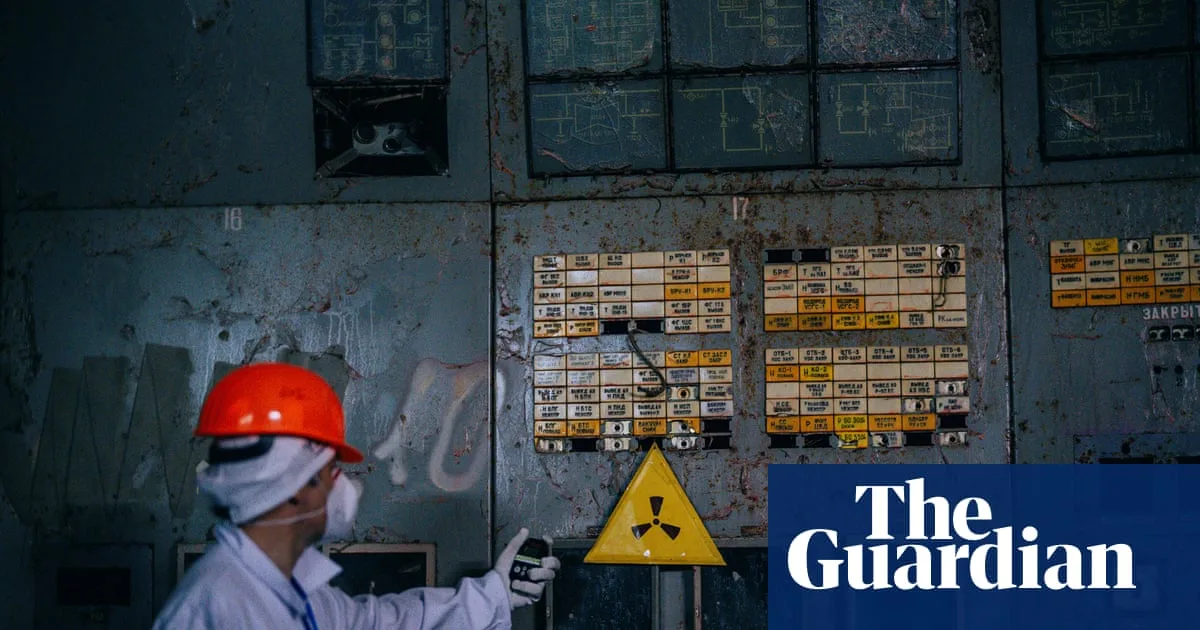
Forty years after the world's worst nuclear accident, the Chornobyl nuclear power plant remains vulnerable, workers have warned. In February 2025, a cheap Russian drone tore through the site's confinement shelter, highlighting ongoing risks.
The 'new safe confinement' (NSC), a $2.5bn steel structure completed in 2019, was designed to shield the world from the radioactive ruins of reactor No 4, which exploded in 1986. But a drone strike on 14 February 2025 punched a 15 sq metre hole in the arch, compromising its ability to contain any radioactive release.
“If the sarcophagus collapses, over a hundred tonnes of nuclear fuel would be released into the air,” said Serhii Tarakanov, the plant's director general. The sarcophagus, a concrete tomb built in 206 days after the disaster, holds 180 tonnes of nuclear fuel and up to five tonnes of radioactive dust.
Repairs are needed within four years, at an estimated cost of up to €500m (£432m), but Ukraine's cash-strapped government has yet to secure the funds. Meanwhile, Russia continues to launch drones and missiles near the plant, raising the risk of another disaster.
Oleksandr Skomarokhov, deputy chief engineer with nearly 40 years' experience, recalled the night of the strike: “We witnessed shelling before, but I knew they would only wake me if something critical had happened.” The blast also damaged the humidity control system, putting the steel structure at risk of corrosion and failure.
Eric Schmieman, an engineer who led the arch's conceptual design, said in a damage assessment that the strike destroyed the NSC's main functions. Experts warn that if the sarcophagus collapses, it could release radioactive material into the air.




