
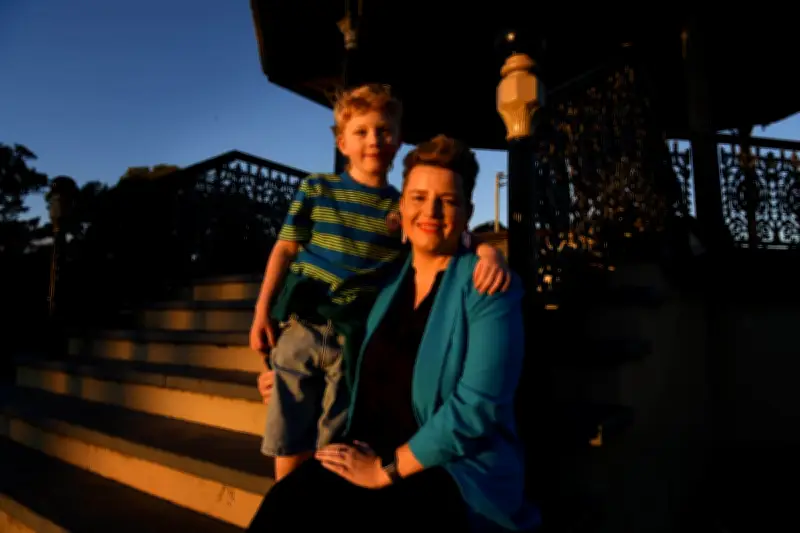
Self-professed “data nerd” April Long was excited to fill in their first census after welcoming their son, Kai. But as they opened the 2021 survey, they quickly realised it wasn’t made for them. It excluded Long’s role as a parent, made assumptions about their gender and asked where Kai’s mother and father were born, when he has two mums.
Many “rainbow families” echoed similar experiences of the census being unable to fully capture the LGBTQ+ community. “When my son started school, I wanted him to be able to grow up and know there are families like ours, and that we are part of the country’s story,” Long says.
Historic changes in 2026
At the census on 11 August, Australians over the age of 16 will be asked to identify their sexual orientation and given separate questions on their sex at birth and gender for the first time. The 2026 iteration also introduces non-gendered terms to questions on household and family relationships, among other changes.
“This is probably the most progressive census Australia has ever seen,” Australian National University demographer Dr Liz Allen says. “Imagine being born into a body or orientation that you have absolutely no control over and yet you are forced to put yourself in a box you simply don’t fit in.”
Campaign for inclusion
The Australian Bureau of Statistics explored adding topics on gender and sex to the census for years, especially after Australians voted to legalise same-sex marriage in 2017. Though it can make recommendations about potential changes, the final decision on census topics rests with the government.
At the time of the 2021 census, the Liberal party was in power. But Labor’s victory at the 2022 election reinvigorated hope for change, and in September that year, Long and LGBTQ+ group Equality Australia lodged a complaint to the Australian Human Rights Commission alleging the ABS had unlawfully discriminated against Long, their family and other members of their community.
The campaign was not easy, and Long quickly became the subject of targeted discrimination. “It came at a personal cost, but the alternative was we did nothing and hoped that something changed – history shows us that just doesn’t work,” they say.
Government backflip
In August 2023, the bureau published a statement of regret, acknowledging the complaint and committing to a series of changes. Then, in 2024, the party walked back on its commitment and confirmed it would not include questions on sexual orientation or intersex variations in the next census. The following two weeks were “nothing short of a shit show”, Allen says.
Long was at Bunnings when they received the news. “My stomach just dropped, I was like ‘how does this make sense?’” they say. “We’d done everything we were supposed to do … I just sat in the car and cried.”
Later reporting revealed the prime minister, Anthony Albanese, had made a captain’s call not to include the questions over fears it would blow up into a culture war. But as the furore grew, Albanese began backing down. He announced the ABS would include one new question on sexuality – which was met with anger from the gender diverse community. Days later, the government backtracked again, revealing it would set up a new topic for inclusion in the 2026 census, allowing the ABS to ask questions on sexual orientation and gender. A topic on variations of sex characteristics was not recommended by the ABS and would not be included.
Impact of being counted
Census data is used to inform almost every aspect of Australians’ lives and previous limitations on data from LGBTQ+ communities meant their needs were not adequately catered for in policymaking, Allen says. “Without an accurate reflection of the nation by way of the census, we are essentially blindfolding ourselves to data and evidence.”
Within months, Australia will have access to an unprecedented body of information about LGBTQ+ people and communities to help shape policy, research, planning, services and more, LGBTIQ+ Health Australia said. “This ability to reflect the Australian community will provide such an important part of the value that the census brings,” the ABS’s census national spokesperson, Emily Walter, says.
Long and their family are already planning a census party to fill in this year’s survey. But they are even more excited for the day Kai completes his first census. “It’s going to be another milestone because he doesn’t have to wonder if his family fits in,” they say. “It will just be normal.”




