
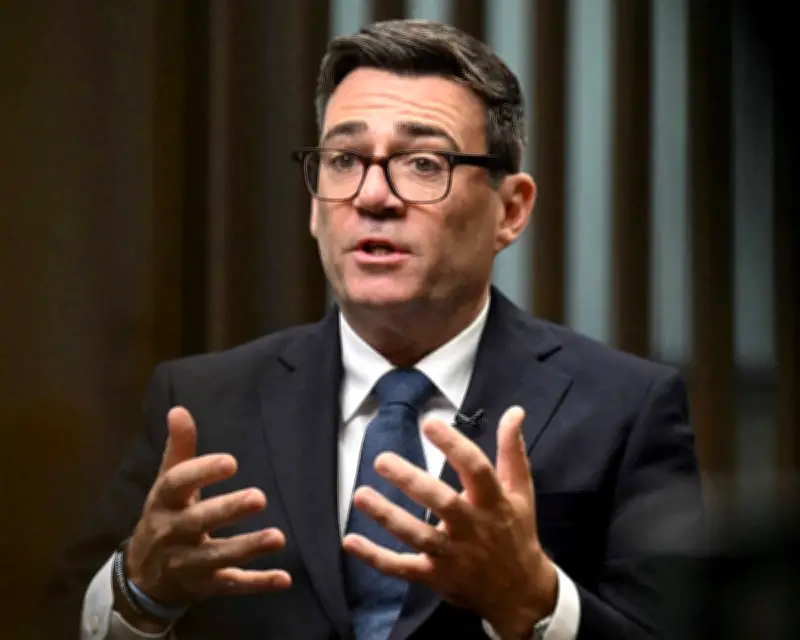
Andy Burnham has pledged a shift toward “problem-solving, not point-scoring” ahead of a key speech on social care, where he will outline his strategy to resolve one of Britain's most enduring political challenges.
The prime minister has invited Conservative leader Kemi Badenoch and Liberal Democrat leader Ed Davey to cross-party discussions on urgent social care reform. Davey confirmed he would attend via video call, while the Conservatives said Stuart Andrew, the shadow health secretary, would represent Badenoch due to her planned minor surgery.
Optimism tempered by political hurdles
Despite the push for consensus, the prospects for agreement appeared uncertain after the Tories set out their own preconditions and amid negative headlines over inheritance tax. Several Labour MPs also voiced concerns about managing the financial burden of a reformed care system.
In his speech, Burnham is expected to stop short of presenting detailed proposals, instead confirming plans to speed up the independent review led by Louise Casey, which has been exploring options. Casey will launch the Big Conversation on Care on Wednesday, inviting public input via an online platform. She has warned that money alone will not solve the problem.
Options and financial challenges
Burnham is understood to favour a system free at the point of use, akin to the NHS, while viewing alternatives like a care costs cap as less attractive but cheaper for taxpayers. A middle-ground option would be a model similar to Scotland's, where personal care costs are state-funded but accommodation and food in care homes are not.
Whichever path is chosen will likely require significant extra investment, probably through tax increases. Burnham previously proposed replacing inheritance tax with a 10% levy on all estates, which could raise up to £18bn. He did not rule out this option at the weekend.
The economic backdrop is tightening, with the NIESR thinktank warning of “very difficult trade-offs” in the autumn budget if oil prices and inflation remain high due to the Iran war.
Reactions and concerns
Before visiting a care home, Burnham said: “This comes down to a choice. We can carry on passing the problem to the next generation, or we can face it head on and work together to build a care system that gives people dignity, security and the support they deserve.”
Labour MPs broadly welcomed reform but cautioned about protecting people from losing homes to care costs or penalising those who had saved. One minister said Burnham “must exercise a lot of care” in managing trade-offs between quality, cost, and who pays.
A centrist Labour MP noted: “It’s vital that the UK at least tries to do something because we will never be able to contain the rising costs of the NHS.”
On the left, some urged adopting a full NHS-style system, saying it would show the government is ready to “walk the walk”. Another Labour figure said: “Andy doesn’t have the goodwill from the electorate that Keir did in 2024 because we messed it up over the last two years so people feel betrayed and ignored.”
Opposition responses
A Conservative source criticised the short notice, saying: “If Burnham was serious about working cross-party he would have given us more than 18 hours’ notice for a 30-minute meeting during recess.”
Davey posted on X: “I’m hopeful this call may prove to be the first step towards fixing our broken care service.”
Nigel Farage, who was not invited as Reform UK has only seven seats and he is not a sitting MP, accused Burnham of “conspiring behind closed doors with the failed political establishment”.




