
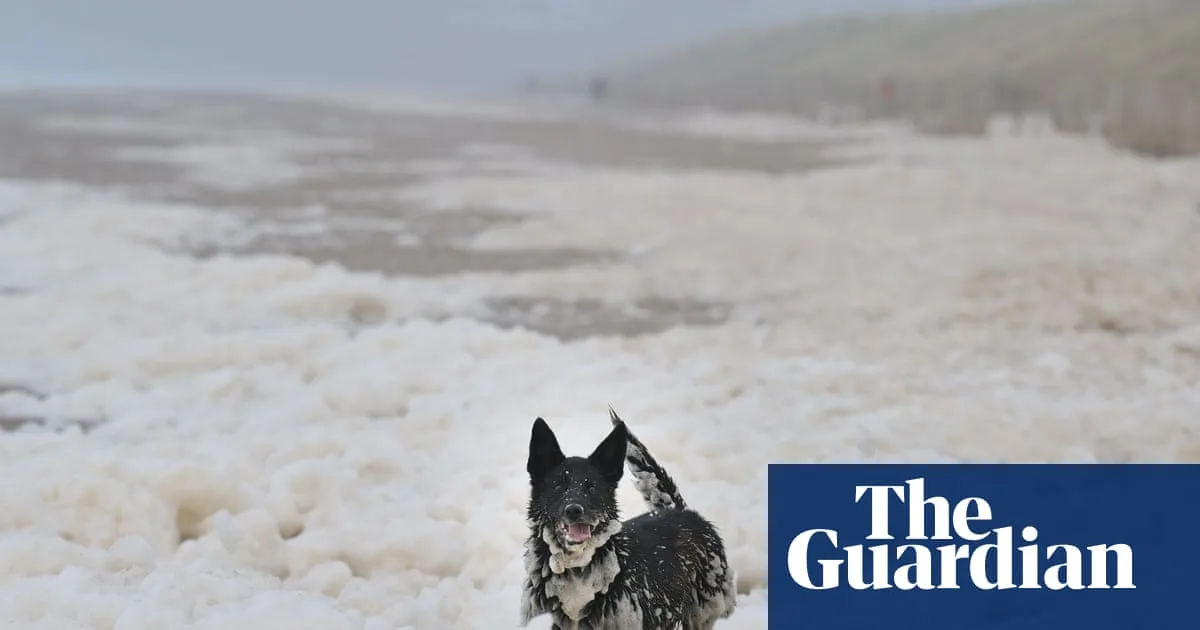
At this time of year, a frothy substance often appears along Britain's coastline, sometimes mistaken for pollution or sewage. However, sea foam is a natural phenomenon caused by a combination of algae and weather conditions.
Sea algae, particularly the common and non-toxic phaeocystis, begin to grow in April as temperatures rise. When the algal bloom dies, it leaves a brown scum of organic material with surfactant properties, which lowers the water's surface tension, similar to soap.
These natural surfactants create foam when the water is disturbed. Breaking waves churn the water, producing yellowish-brown foam along the shoreline. This foam can be so abundant that fragments blow about like thistledown.
Wind over the sea creates rotating horizontal currents known as Langmuir circulation, which push water downward in some areas and upward in others. Sea foam gathers in long parallel lines in calm sections, called windrows or drift lines.
While sea foam may look unnatural and sometimes smells foul, it is generally harmless and a natural part of the marine environment.




