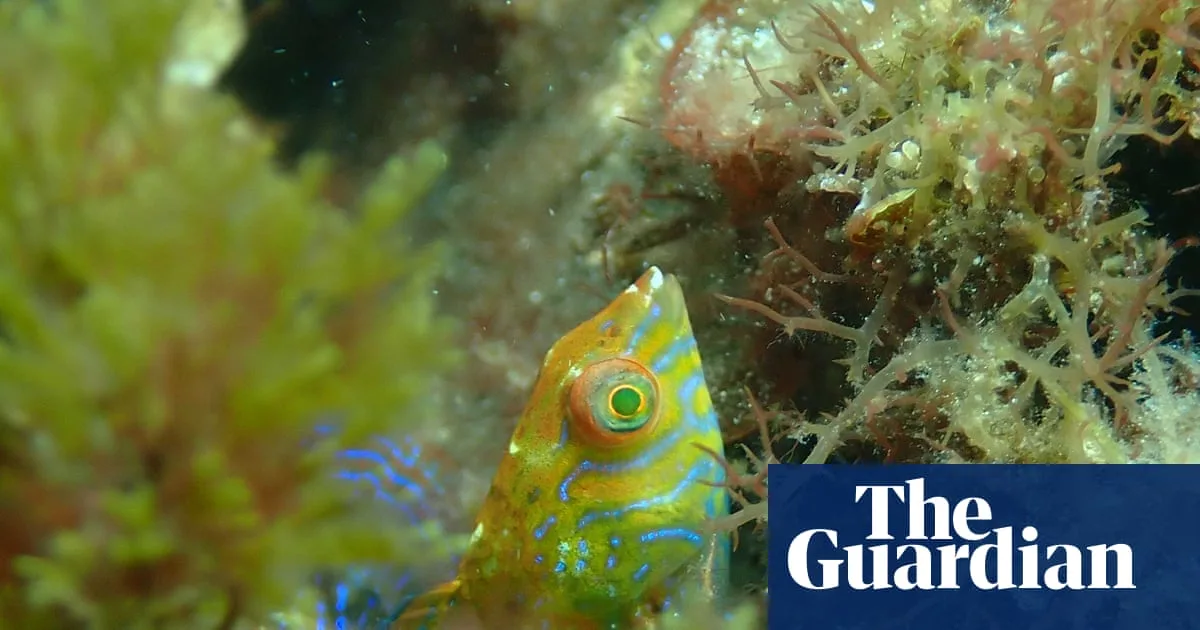
Marine biologist Océane Attlan experienced a moment of disbelief when she spotted a tiny iridescent fish during a dive off the coast of Albany, Western Australia. The fish, known as Braun's wrasse, had not been seen since 2009 and was feared possibly extinct. Attlan, from the University of Western Australia's Oceans Institute, was on the final dive of a four-day expedition surveying kelp forests when she encountered the elusive species.
“All of a sudden I saw this fish. You know when you recognise a familiar face, but you can’t put a name on it. That’s the feeling I had,” Attlan said. The team had joked about the possibility of finding the wrasse, but the sighting on the last day was unexpected. Attlan did not have a camera, but fellow researcher Dr Albert Pessarrodona managed to snap two photographs before the fish disappeared into the kelp.
Braun's wrasse is a small, brightly coloured fish, measuring between six and seven centimetres, with distinctive lines around its eyes. It is described as cryptic and shy, hiding among seaweed. The species has one of the smallest geographic ranges of any temperate fish in Australia, inhabiting rocky reefs near Albany within the Great Southern Reef ecosystem.
The photographs were later uploaded to a fish identification platform, where curators from the Western Australian Museum and the researcher who last recorded the species in 2009 confirmed it was Braun's wrasse. The sighting allayed fears that the species might have gone extinct following recent marine heatwaves in south-west Australia.
Fish ecologist Professor Culum Brown from Macquarie University, who was not involved in the survey, noted that spotting rare fish is always exciting. “The more time you spend underwater, the more time you sit still, watching and seeing what’s going on, there’s a really good chance that you’re going to find something or see something that no one’s ever seen before,” he said. He added that the rediscovery might spark increased interest among divers looking for the species.