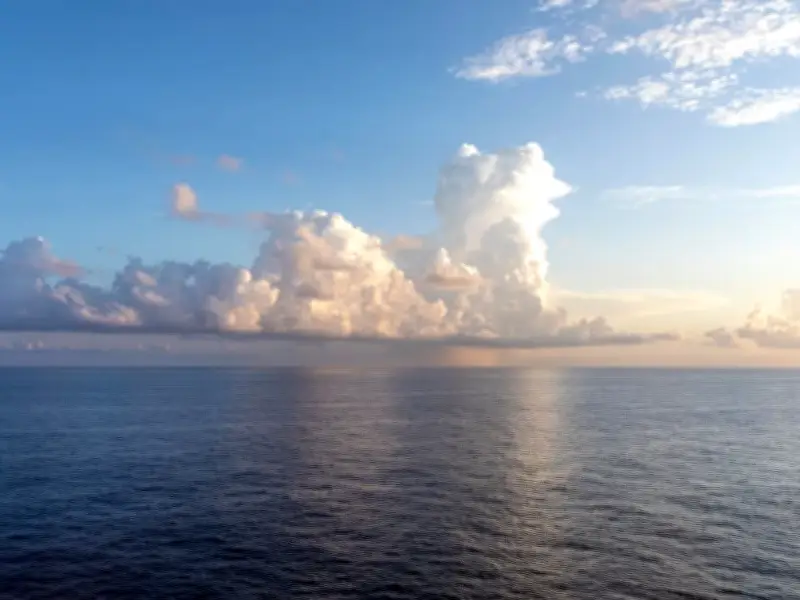
In the middle of the South Pacific Ocean lies an area of the sea where the closest human contact is the astronauts aboard the International Space Station (ISS), hundreds of kilometres above the Earth. This lonely spot, known as Point Nemo, is 2,688 kilometres away from land and just 300 kilometres away from the ISS orbiting the Earth.
A Remote and Deep Ocean Location
The ocean below is 4,000 metres deep and is home to a variety of marine animals, from thriving microbes to tuna, swordfish, and marlin.
Point Nemo is also the planned final resting place for the ISS. The massive space station is set to be decommissioned in 2031, and NASA has revealed plans to crash the 400-tonne structure into the ocean's depths.
Planned Decommissioning of the ISS
SpaceX has been contracted to construct another spacecraft that will push the ISS out of orbit and guide it to a point where it can re-enter the atmosphere. According to a transition report published by NASA in 2022, the ISS will be evacuated and decommissioned before it is positioned to drop into the sea below.
The report reads: “After performing manoeuvres to line up the final target ground track and debris footprint over the South Pacific Oceanic Uninhabited Area (SPOUA), the area around Point Nemo, ISS operators will perform the ISS re-entry burn, providing the final push to lower ISS as much as possible and ensure safe atmospheric entry.”
A History of Spacecraft Disposal
The ISS will not be the first spacecraft to fall to a watery grave at Point Nemo. The area is also known as the “spacecraft cemetery” due to the hundreds of pieces of crafts that have fallen over the years. It is widely considered a safe place for space junk to re-enter the atmosphere, as it is so far from any land that there is little risk of shrapnel injuring people.
It is also far outside the jurisdiction of any country, so it has far fewer regulations. Defunct space stations Mir and six Salyut stations have already been ditched there, among more than 263 spacecraft that have been disposed of in the area between 1971 and 2016.