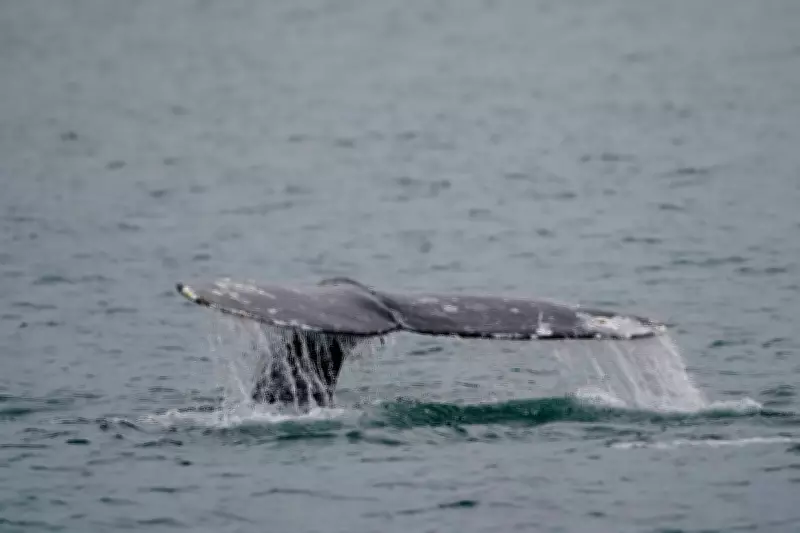
Gray Whale Mortality Crisis in San Francisco Bay
At least six gray whales have perished in San Francisco Bay between mid-March and early April 2026, continuing a distressing pattern observed over recent years. Marine biologists are increasingly concerned that 2026 may become another perilous year for this already struggling population, with mortality rates reaching alarming levels.
Migration Patterns and Urban Dangers
The majority of eastern North Pacific gray whales undertake an extensive migration along the California coastline, traveling from their winter breeding grounds in Baja California, Mexico, to their summer foraging areas in the Arctic. These massive creatures, which can grow to over 40 feet in length and weigh up to 90,000 pounds, historically haven't consistently stopped over in San Francisco Bay. When they have, it has typically coincided with years of diminished food supplies in their Arctic feeding grounds.
However, over the past several years, researchers have documented significant numbers of gray whales entering San Francisco Bay waters, accompanied by an exceptionally high mortality rate. The bay presents a particularly hazardous environment for these slow-moving marine mammals, as it serves as a busy urban waterway filled with high-speed ferries, cargo ships, commercial fishing vessels, and recreational watercraft.

Research Findings and Mortality Statistics
Through comprehensive research surveys and photographic documentation collected from whale-watching naturalists and community observers, scientists have been monitoring gray whale activity in the bay. Gray whales possess distinctive mottling patterns and markings on their sides and tails, some present from birth and others accumulated over time, allowing for individual identification.
The research revealed that from 2018 to 2025, 114 individual gray whales visited San Francisco Bay for varying durations, yet remarkably few of these whales returned as repeat visitors from year to year. This low return rate may be partially attributed to the bay's high mortality environment.
At least 18% of the whales documented alive in San Francisco Bay between 2018 and 2025 subsequently died in the area, with evidence suggesting the actual mortality rate may be even higher. Among the 70 deceased whales included in the study, 30 showed clear evidence of trauma consistent with vessel strikes. Many other whale fatalities couldn't be examined due to accessibility issues. Researchers also observed several living whales bearing injuries from vessel encounters, which could significantly impair their ability to thrive and survive.
Population Decline and Recovery Challenges
Since 2016, the overall eastern North Pacific gray whale population has plummeted by more than half, primarily driven by declining food availability. Rising ocean temperatures and diminishing sea ice levels are adversely affecting both the quality and accessibility of the gray whales' prey, which includes crustaceans they scoop from the seafloor during dives.
While this population previously rebounded from major die-offs in the 1990s and early 2020s, the current situation appears more dire. Extremely low calf numbers in recent years indicate that gray whales aren't recovering as rapidly this time, raising serious concerns among scientists.
Some gray whale subgroups, including the Pacific coast feeding group and North Puget Sound whales known as the Sounders, have adapted by feeding in alternative areas south of the Arctic. The Sounders specifically target ghost shrimp in Puget Sound. During periods of Arctic food scarcity, they extend their stays in these alternative feeding grounds and are often joined by whales from the general population. Contrary to initial assumptions, researchers determined that the whales entering San Francisco Bay weren't primarily from these specialized groups.
Regional Threats and Conservation Strategies
Vessel strikes aren't exclusive to San Francisco Bay. In April 2026, two gray whales were found dead on the Oregon coast, both malnourished with one showing evidence of a ship strike. Additionally, a malnourished young gray whale died after swimming approximately 20 miles up the Willapa River in Washington state, highlighting the desperate search for food across their migratory range.

Other large whale species facing similar threats have benefited from management strategies such as seasonal slow-speed zones implemented during migration periods when whales are present. Studies demonstrate that reducing vessel speeds to 10 knots or lower can significantly decrease the risk of vessel strikes by providing whales more time to evade approaching ships and allowing captains greater opportunity to detect and alter course.
The National Oceanic and Atmospheric Administration has recently issued requests for ships to voluntarily reduce speeds to 10 knots in Pacific Ocean waters off Monterey and San Francisco, though these measures haven't been mandatory and typically don't commence until May 1. Similarly, the Port of Oakland encourages shipping companies to maintain speeds under 10 knots, but this remains a recommendation rather than a requirement.
Enhanced education for boat operators on whale avoidance techniques, combined with technological tools like thermal cameras, could help reduce vessel strikes in San Francisco Bay. As the gray whale population struggles to adapt to environmental changes, San Francisco Bay may appear increasingly attractive as a feeding ground to nutritionally stressed or hungry whales. Researchers hope their findings and regional data will assist marine resource managers and policymakers in developing effective protection strategies for these magnificent creatures sharing our busy urban waterways.