
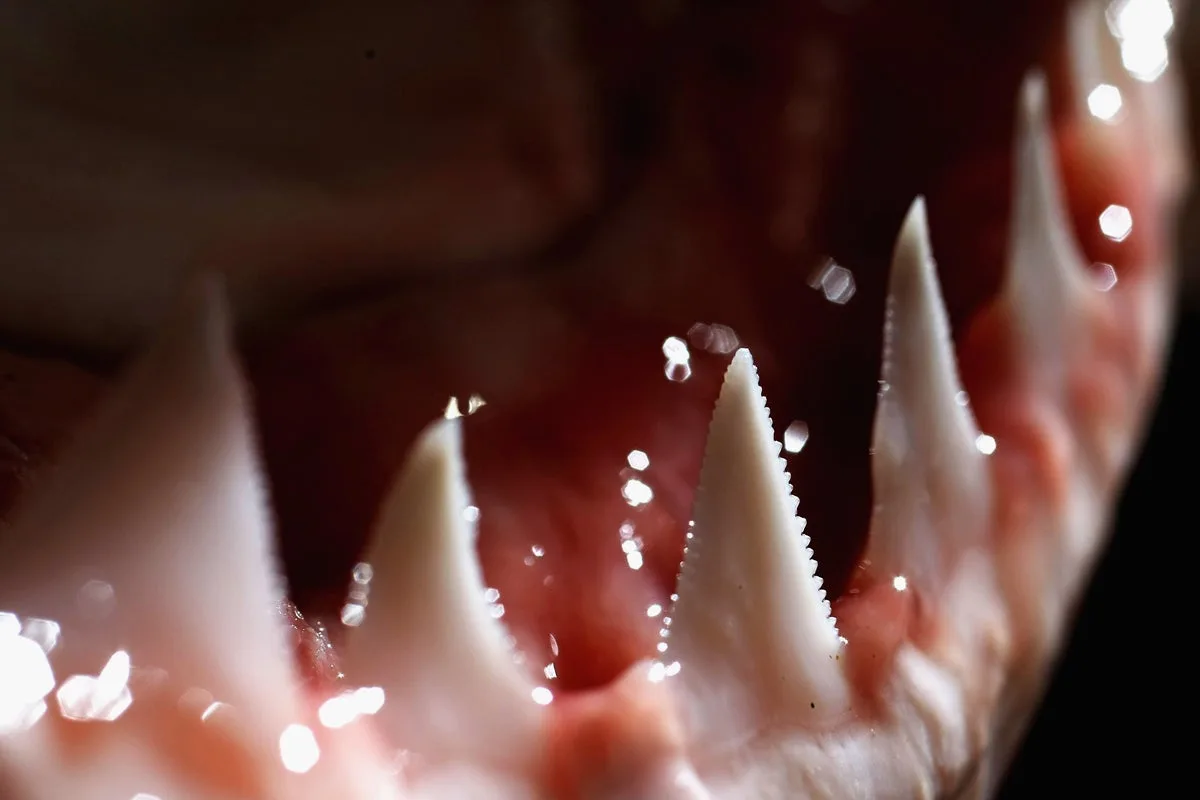
Sharks' fearsome teeth, essential for their role as apex predators, could be compromised by increasing ocean acidification, a new study suggests. German scientists from Heinrich Heine University Düsseldorf have found that more acidic waters may weaken sharks' teeth, making them more prone to damage.
The researchers exposed over 600 discarded teeth from blacktip reef sharks to water with current acidity levels and those projected for the year 2300. Teeth in the more acidic environment showed significant corrosion, including cracks, holes, and structural degradation. The findings were published in the journal Frontiers in Marine Science.
Lead author Maximilian Baum warned that while sharks will not become toothless overnight, the corrosion effect could endanger their ecological success. However, other experts caution that factors such as overfishing remain more immediate threats. Nick Whitney of the New England Aquarium noted that teeth develop inside mouth tissue, offering some protection, and pointed to sharks' 400-million-year history of adaptation.
Ocean acidification, driven by carbon dioxide absorption from fossil fuel burning, is predicted to make the ocean nearly ten times more acidic by 2300. The study adds to concerns about broader marine impacts, including harm to shellfish and fish scales, though some effects may be complex. Gavin Naylor of the Florida Program for Shark Research emphasised that overfishing is currently the biggest danger to sharks.




