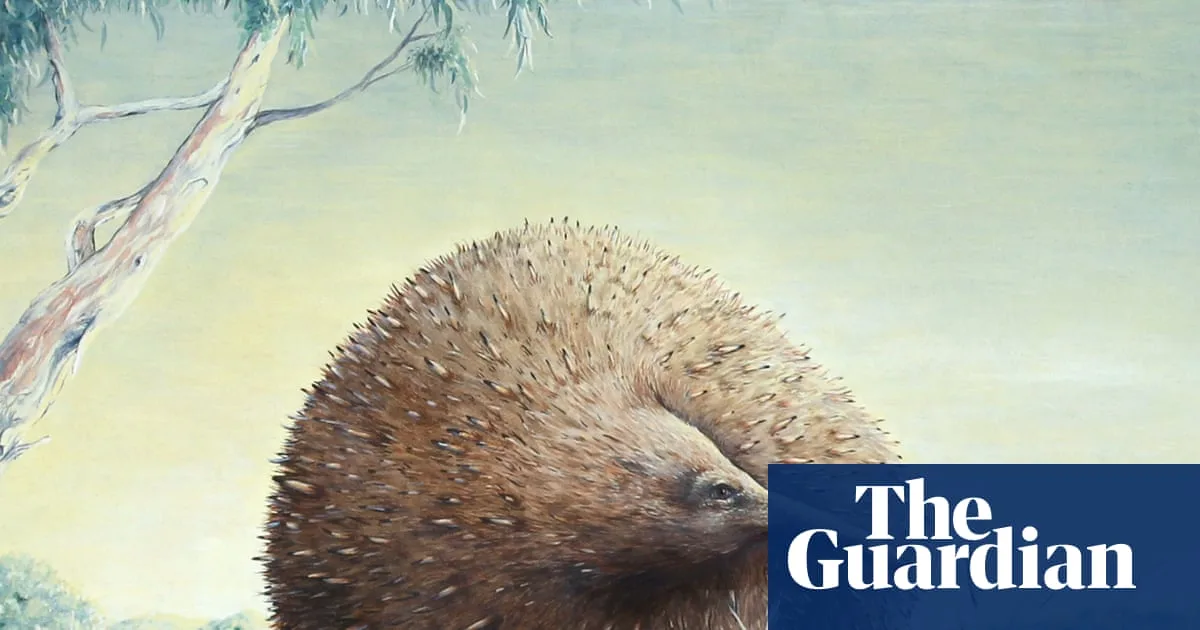
Giant Echidna Fossil Hidden for 120 Years Reveals Ice Age Victoria Roamers
Giant Echidna Fossil Hidden 120 Years Reveals Ice Age Victoria

Ice Age Giant Echidna Fossil Uncovered After 120 Years in Museum Storage

A prehistoric fossil, concealed in plain sight within museum storage for over a century, has definitively revealed that colossal giant echidnas once traversed the landscapes of Victoria during the Pleistocene epoch. This groundbreaking discovery resolves a perplexing gap in the fossil record, demonstrating that these formidable monotremes were indeed present in the region, despite their previous mysterious absence from documented evidence.

The Remarkable Discovery in an Unsorted Tray

Tim Ziegler, the esteemed collection manager of vertebrate palaeontology at the Museums Victoria Research Institute, made the pivotal find while examining a tray of unsorted fossils that had been excavated as far back as 1907 from Foul Air Cave, located within the extensive Buchan cave complex in East Gippsland. Ziegler recounted the moment he identified a singular skull fragment, noting its symmetrical structure, distinctive palate arch, and internal spaces indicative of respiratory pathways, which collectively signalled it was an echidna beak of extraordinary size.

Initially mistaken for a hind limb of a small kangaroo due to its unassuming appearance, this fragment, no longer than a human finger, proved to be the key to unlocking a significant palaeontological enigma. Ziegler's instinctive recognition in 2021 prompted meticulous further investigation, including comprehensive 3D scans of both modern and fossil echidna specimens from various national museum collections, to irrefutably confirm the identification.

Wide Pickt banner — collaborative shopping lists app for Telegram, phone mockup with grocery list

Unveiling the Owen's Giant Echidna

The specimen has been identified as belonging to the Owen's giant echidna, scientifically known as Megalibgwilia owenii, a species that thrived during the Pleistocene epoch commencing 2.5 million years ago. This imposing creature measured approximately one metre in length and weighed up to an impressive 15 kilograms, rendering it nearly twice the size of contemporary Australian echidnas. Its robust skeletal framework, particularly evident in the limbs with deeper muscle scars and larger ligament attachments, suggests it exerted considerable force when interacting with its environment, possibly for digging or tearing tree bark to access prey such as larvae, beetles, or bogong moths.

Historical archives corroborate that the fossil was originally collected by museum officer Frank Spry during an expedition to Foul Air Cave more than a century ago, thereby embedding this discovery within a rich narrative of early scientific exploration. The identification of this Buchan specimen crucially fills a substantial 1,000-kilometre distribution gap in the species' known range, which previously spanned from Western Australia to Tasmania, including findings in New South Wales, South Australia, and the island state, likely connected by a land bridge during the ice age.

Resolving a Long-Standing Palaeontological Mystery

For decades, the absence of giant echidna fossils in Victoria posed a compelling question for researchers: why were these animals not recorded in a region characterised by historically temperate and forested habitats? Ziegler eloquently summarises the revelation, stating, "It turns out they were there all along. And we just needed the right moment to recognise their presence." This discovery not only enriches our understanding of Australia's prehistoric fauna but also highlights the enduring value of museum collections in yielding new insights from long-held artefacts.

The comprehensive research detailing this significant find has been formally published in the prestigious Alcheringa: An Australasian Journal of Palaeontology, marking a seminal contribution to the fields of mammalogy and palaeontological science. This revelation underscores the importance of persistent re-examination of historical collections, as they continue to unveil hidden truths about our planet's ancient inhabitants and their ecological distributions.

Pickt after-article banner — collaborative shopping lists app with family illustration




