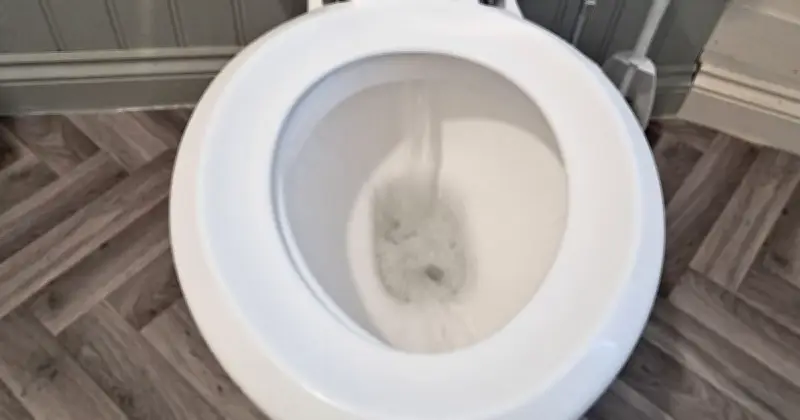
Limescale in a toilet can be removed in about one hour using citric acid, without vinegar, cola, or scrubbing. The acid dissolves the mineral build-up, which then flushes away.
Toilets can be difficult to keep germ-free because of the stains that build up in the basin. A brown ring around the waterline that does not budge with bleach and a brush is likely limescale, not rust. Limescale forms when dissolved minerals are left behind as hard water evaporates, and over time it hardens into a tough stain that binds to porcelain and traps bacteria.
Why citric acid works
Limescale minerals are mainly alkaline and can become almost rock-like, so scrubbing does little. Bleach is a disinfectant and only lightens the stain, giving the minerals more time to build up inside the bowl. The only effective way to remove limescale is with an acid, which reacts with the minerals to dissolve them.
Citric acid comes from the juice of citrus fruits like lemons or oranges, and the cleaner sold in supermarkets is a powdered, more powerful version. It is strong enough to loosen limescale without damaging the toilet, breaking it down into smaller pieces that can be flushed away.
Positives and downsides
Other natural acids like vinegar or cola are very weak. They might remove everyday limescale but will not do much against a stain that has been sitting for a while. Citric acid is a cheap product that removes limescale without requiring hard cleaning afterwards.
One downside is that citric acid can be tricky to find in supermarkets. Local Aldi and Lidl stores did not stock it, so it is worth checking online before going to the shops. It was bought for £2.25 at B&Q, and it is also available on Amazon, Savers, Home Bargains, and many pound shops.
How to use citric acid
Pour around 50g (about three tablespoons) of citric acid down the toilet, then add about 500ml of warm water to the basin. Do not use boiling water, as it risks cracking the porcelain. Do not flush; leave the lid down so the citric acid can sit for a few hours to break down the limescale.
Leaving it for at least one hour works, but applying it before bed and leaving it overnight is easier for bad limescale build-up. Once the time is up, flush the toilet and the limescale should be gone. Using citric acid once a month can prevent limescale from coming back.
One important note: do not mix bleach or most toilet cleaners with anything acidic, as it can create chlorine gas. Wait at least 24 hours after cleaning a toilet with bleach, and make sure all residue has been thoroughly flushed away before trying to remove limescale.