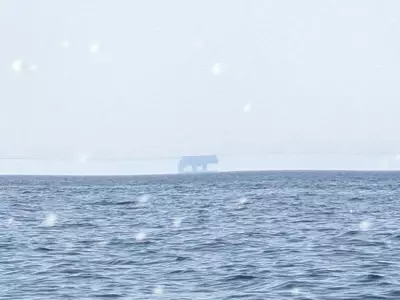
A nine-metre southern right whale, known as tohorā in Māori, has been successfully freed after becoming entangled in a large fishing net off the southern coast of New Zealand. The complex rescue operation spanned multiple days and involved a team of experts from the Department of Conservation (DOC) and local fishers.
First Recorded Entanglement of Its Kind
The whale was first spotted by fishers on Saturday morning near Rakiura (Stewart Island). According to Jennifer Ross, DOC’s Rakiura operations manager, this is the first time a southern right whale has been recorded entangled in New Zealand waters. The rescue required an advanced level of expertise due to the species’ size and unpredictable behaviour.
The whale was dragging four buoys and 100 metres of rope behind its tail. Although not in immediate danger, it showed signs of distress and had a wound on its tail that posed a risk of infection.

Expert Response and Tracking
Zac Penman, DOC’s expert in large whale disentanglement, was attending a surfing competition in Kaikoura, approximately 800 kilometres away, when he received the call. “Being a southern right whale, it was something we had never dealt with before,” he said. “As soon as I heard that, I started to formulate a plan in my head about how we might possibly deal with the scenario.”
The team located the whale on Monday, finding that a cod pot at the end of the rope had caught on rocks, tethering the animal in place. They attached a satellite tracking buoy to monitor its location while deciding on the best course of action.
Dangers of Disentangling Southern Right Whales
“Tohorā are among the most difficult whale species to disentangle,” said Ross. “They are large, extremely strong and incredibly mobile – this makes any attempt to free them particularly dangerous. Tohorā can change direction quickly, roll 180 degrees, and swim backwards. They’re more unpredictable than other whale species.”
On Monday night, the satellite tracker indicated the whale was moving north towards Bluff, but the department was uncertain whether the tracker had detached and was drifting with the tide. Overnight, the whale managed to break free from the pot and swam approximately 40 kilometres back to Bluff.
The Rescue Operation
On Tuesday morning, the disentanglement team arrived at the Bluff ferry terminal and requested a short detour from the ferry to the tracker’s last known location. “The crew agreed, and because of that detour we were able to get eyes on the whale, and save crucial hours in the day,” Ross said.
The team caught up with the whale by boat just after 4 pm. “We really slowly, really cautiously pulled ourselves up the rope towards it,” Penman recounted. “When we first got to the end of the whale, it realised we were there and let out one big blow – called a trumpet – and you can feel it in your bones. You think, ‘holy moly, I’m in the presence of something so much bigger than me’… it’s about the size of four or five elephants, so it’s something you don’t want to stress out.”
The whale then turned to look at the boat with one of its large red eyes, an experience Penman described as “incredible”. “It makes you feel very small … it’s like looking at the stars, just knowing there is so much more behind that eye.”
The team spent 45 minutes cutting the whale free from the rope and watched as it swam off into the sunset. “We returned to the big boat pretty elated and happy … then we headed back to Rakiura for a well-deserved beer at the pub,” Penman added.
Population and Cultural Significance
There are an estimated 1,000 to 5,000 tohorā in New Zealand waters. They are considered a taonga (sacred) species for Ngāi Tahu, the largest iwi (tribe) on the South Island. The whales suffered dramatic population loss due to whaling and came close to extinction, but their numbers are now slowly increasing. They are recognisable by their arched mouths, v-shaped blow-hole spray, and lack of a dorsal fin.
“This is an animal that every single one in this population counts,” Penman said. “They were whaled nearly to extinction, and being able to do this one thing for this one animal is just something incredible.”

Ross emphasised the importance of reporting sightings promptly. “Whale disentanglement is extremely dangerous and should never be attempted by anyone without the right training and gear. But people reporting sightings quickly has meant we’re able to get the right people in place to try and free the whale.”
The DOC also reminded fishers to set only as much line as necessary, especially during migration seasons when many whale species are moving through coastal waters.