
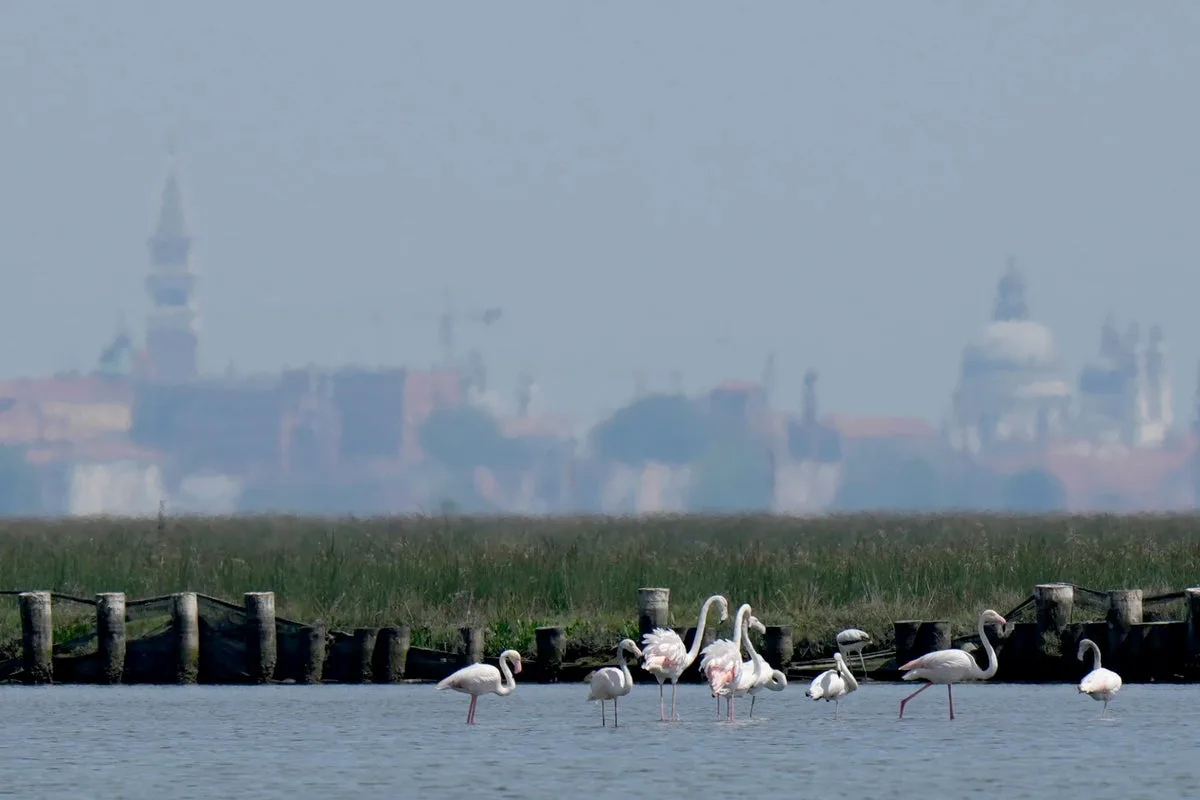
The pale pink birds, known as “fenicotteri” in Italian, are appearing in the Venetian Lagoon in unprecedented numbers, a phenomenon underscored by the lack of a local dialect word for them. Environmentalists say the surge is a sign of the lagoon's improved health, driven by ongoing ecological initiatives to restore damaged wetlands.
In 2025, the number of wintering flamingos peaked at nearly 24,000, up 6,000 from the previous year. Ornithologist Alessandro Sartori, who surveys the lagoon weekly, described this as positioning the Venetian Lagoon as one of the most important wintering spots in the species' entire habitat range. The birds are primarily concentrated in the northern lagoon, where large natural salt marshes and traditional fishing valleys provide abundant food.
However, nesting attempts in 2008 and 2013 were thwarted by severe weather, including hail that killed dozens of birds. Despite two failed attempts, Sartori remains hopeful that ongoing reconstruction of salt marshes in the southern lagoon could encourage nesting. The EU-funded WaterLANDS project, with a budget of €23.6 million (£20.4 million), is rebuilding salt marshes, or “barene”, which have been eroded due to natural processes and dredging for shipping channels.
“Venice is now on a trajectory to becoming a marine bay,” said Jane da Mosto, executive director of We Are Here Venice, the local partner in the project. The restoration aims to reverse this trend, capture carbon dioxide, and mitigate rising sea levels. Over the past three years, flamingo numbers in the southern lagoon have grown from just a handful to between 300 and 400 at certain times.
“The hope is that they can find places where they can nest,” Sartori said, noting that the reconstruction has already attracted more flamingos. The presence of stray pink feathers on the mudflats suggests the birds are increasingly active in the area.




