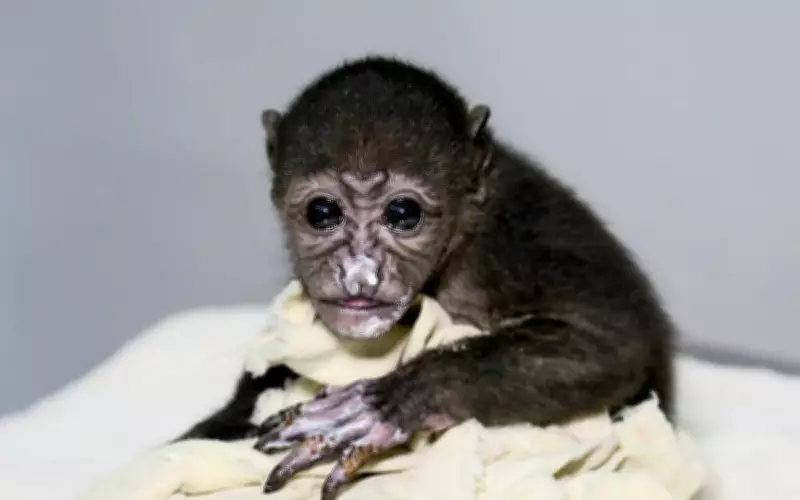
A landmark court ruling in Costa Rica has mandated the state-owned electricity company to take measures to protect howler monkeys from electrocution on uninsulated power lines. The decision, issued by the country's constitutional court in January, gives the Costa Rican Electricity Institute (ICE) and the Ministry of Environment and Energy (MINAE) six months to implement corrective actions in the Nosara district, a popular tourist destination on the Pacific coast.
Rising Electrocution Cases
Electrocution is one of the leading causes of death among wildlife in Costa Rica, with 6,262 cases recorded between June 2022 and June 2023. Primates, particularly howler monkeys, are frequent victims. They often mistake power lines for trees or vines, leading to fatal shocks. At the International Animal Rescue Costa Rica (IARCR) centre in Nosara, 108 electrocuted animals were reported in 2025, with howler monkeys accounting for up to 90% of incidents.
Francisco Sánchez, a veterinarian at IARCR, notes a rise in cases over the past decade, attributing it to increased development in the area. "Now, we have new areas of electrocutions appearing that we didn't have in the past," he says. "This is because of the development of houses, restaurants and hotels."

The Court Ruling
The court action was initiated by IARCR and supported by 20 conservation organisations under the campaign "This Is NOT Pura Vida," a play on the Costa Rican expression of wellbeing. The ruling found that ICE and MINAE had failed to implement effective measures to reduce wildlife electrocution. It orders them to "correct the problem present in the power lines that ICE has constructed in the district of Nosara using bare wiring."
Gavin Bruce, CEO of International Animal Rescue, says the ruling could have nationwide implications. "Although this case was built on data from the Nosara area, the problem is nationwide," he says. "We will now monitor the implementation of the ruling and consider how best to scale these protections across the entire country."
A Global Issue
While research on bird electrocution is abundant, studies on mammals are scarce. Justo Martín Martín, an environmental consultant specialising in this issue for the International Union for Conservation of Nature (IUCN), says the problem is global. "There are records of primates killed on power lines in all regions where they occur, especially in the tropical forests of America, Africa and Asia," he explains.
Fragmented habitats exacerbate the problem. "Monkeys perceive power lines as pathways connecting forest patches," says Martín. "To them, a power line is essentially a line of connected trees." This leads to electrocution when animals attempt to cross roads or move through deforested areas using electrical cables.
In South Africa, an IUCN report documented 432 mammal deaths on power-line towers and poles between 1997 and 2019. In Kenya's Diani area, 370 primate electrocution incidents were recorded between 1998 and 2016.
Prevention and Hope
The most effective solution is to use insulated cables or bury power lines underground. Additional devices can be placed on poles to prevent animals from reaching conductors. Artificial canopy bridges made of ropes or plastics can also facilitate safe movement between forest patches.
MINAE says it has already implemented measures to prevent electrocution and is working on technical solutions. A three-year action plan is expected from MINAE and ICE by the end of June.
Sánchez remains cautiously optimistic. "I'm being realistic because I understand it's really huge work," he says. "Even in a small place like Nosara, there's a lot of work that needs to be done and a lot of stakeholders that need to get together."