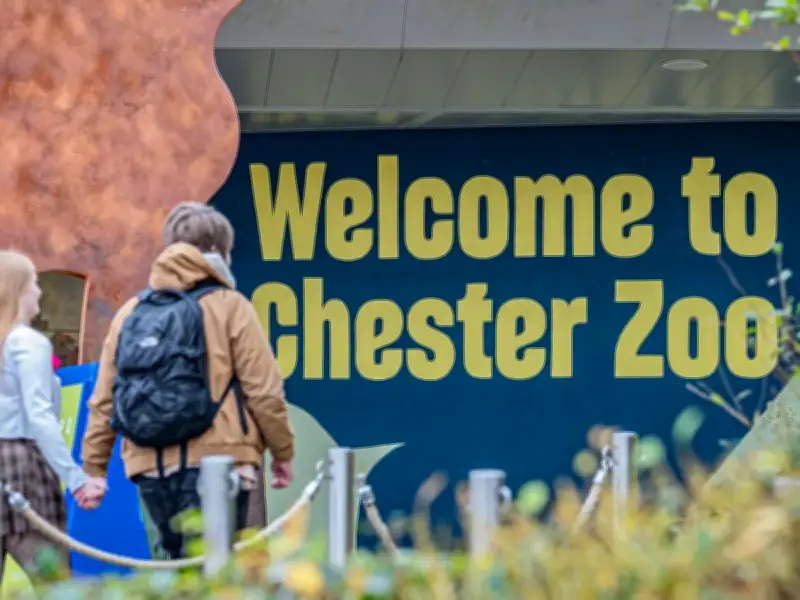
Two critically endangered hooded vultures, named after BBC The Traitors stars Claudia Winkleman and Alan Carr, have arrived at Chester Zoo. They are the first breeding pair of their species to ever live at the Cheshire conservation zoo.
Conservationists are hoping the newly bonded pair will produce youngsters to help safeguard the species from extinction. The birds have just passed their vet check and are now settled into their home, which they share with two white-headed vultures.
A Strong Bond from the Start
The newly arrived pair already have a strong bond, and keepers hope their relationship will eventually lead to a new generation of young vultures as part of a Europe-wide conservation breeding programme.
Bird keeper Heather-Anne Pedley said: "Alan and Claudia came to us from the Horstmann Trust, a conservation breeding centre for vultures, where they are an established breeding pair."
Named After National Treasures
Pedley added: "We named them after Traitors stars Alan Carr and Claudia Winkelmann, because what better way to reflect how funny and engaging they are than to name them after two national treasures?"
"Nobody prepared me for how much I would fall in love with them, their antics and characters. They look like they've just put a hood up, and they have this beautiful blue ring around their eyes, like natural eyeliner."
Monogamous Love Birds
Pedley said hooded vulture couples are monogamous and will preen each other, gently touch each other's bills and co-build nests. "This pair are real love birds, and we are hopeful they'll go on to breed," she said.
"Any youngsters they go on to have will become part of a European conservation breeding programme, helping to create an insurance population for this incredibly rare species. They're fascinating birds, very active, clever and interested in their environment - and they don't wait their turn at feeding time."
Nature's Clean-Up Crew
Hooded vultures, which have wingspans of up to 180cm, traditionally had a wide range across west, central and southern Africa, where they soar over the land looking for carcasses to feed upon. These birds, which have dark brown feathers on their body, a buff "hood" and a distinctive bald face and throat, are known as "nature's clean-up crew".