
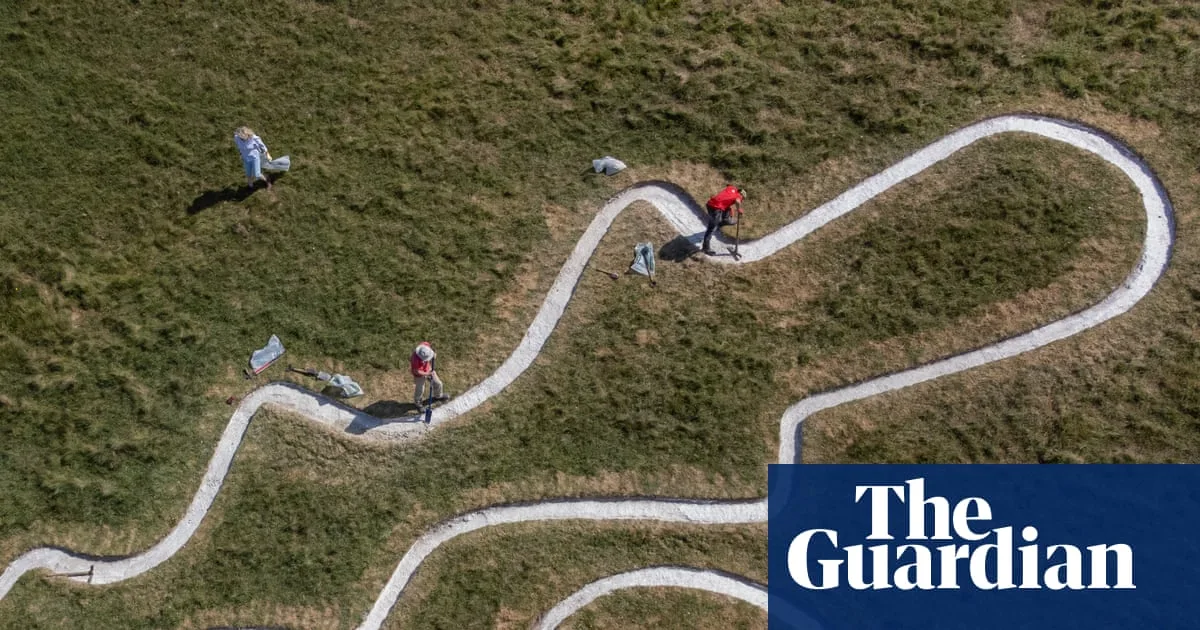
Volunteers and National Trust staff have begun the painstaking process of rechalking the Cerne Abbas Giant in Dorset, using 17 tonnes of chalk to restore the ancient hill figure to its gleaming white outline. The work, which occurs roughly every seven to ten years, has become more urgent due to the effects of the climate emergency, which are dulling the giant and making it more fragile.
Luke Dawson, a National Trust lead ranger, said warmer, wetter conditions may be driving algae growth that dims the giant's brightness, while more intense rainfall increases water runoff and gradually wears away the chalk. The trust is considering more frequent rechalking and measures to retain water in the landscape, such as allowing scrub to develop and establishing permanent grassland.
This year's rechalking technique has been adapted to cope with the steep hill: instead of packing in dry chalk, workers are mixing chalk with water to form a paste, which sticks more easily. The hot weather has also forced changes, with afternoon shifts cancelled and workers rechalking for only 20 minutes per hour, taking breaks in gazebos for shade.
The National Trust, which owns the site, has been joined by local volunteers, including a vicar, brewery staff, and schoolchildren. A fundraising appeal backed by Stephen Fry raised £330,000 in 60 days, allowing the trust to buy land around the giant to protect the landscape. Donors from as far as Australia, Japan, and Iceland contributed, and some won the chance to help with the rechalking.
The giant's origins date to the late Saxon period (AD700-1100), according to scientific analysis commissioned by the trust in 2021. Despite the challenges, the sight of workers on the hill on a bright late spring day was joyful, with Dawson noting that everyone in the village has a connection with the beloved figure.




