Historic England has added 16 sites across London to its 2026 Heritage at Risk Register, the annual list highlighting buildings and monuments threatened by neglect, decay, structural problems or uncertain futures.
The new additions bring the total number of at-risk heritage assets in London to 596. Last year alone, 24 London sites were rescued and removed from the register.
Key New Additions
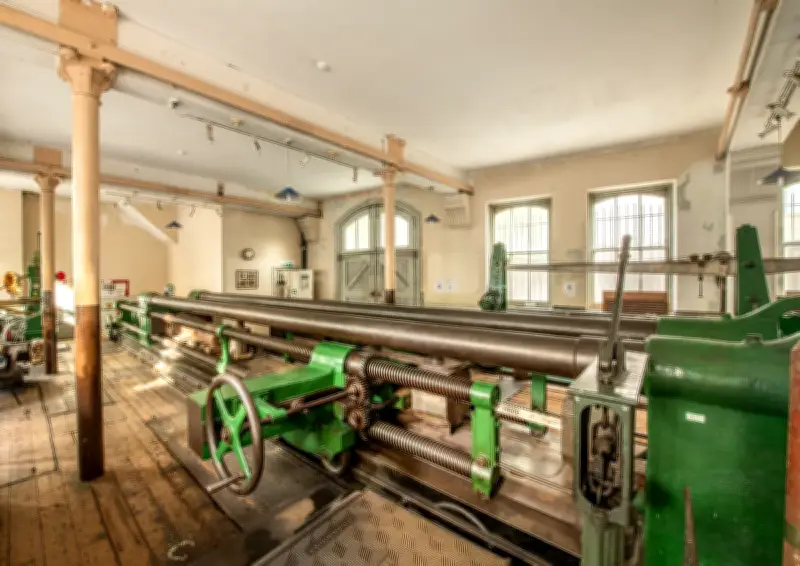
Among the most remarkable additions is Kirkaldy's Testing Works on Southwark Street. The Grade II*-listed building is regarded as the world's earliest purpose-built independent commercial materials testing laboratory. Built in 1873 for engineer David Kirkaldy, it houses a giant hydraulic testing machine that survives in largely original condition and remains one of the oldest working examples of its kind anywhere in the world. Elements of major Victorian engineering projects were tested here, while investigations into disasters including the Tay Bridge collapse were carried out at the site. Historic England says the building is suffering from water penetration and extensive damp, leaving it in poor and declining condition.
Gallows Tamkin, hidden within Coombe Wood Golf Course, was built between 1538 and 1540 as part of Henry VIII's project to provide Hampton Court Palace with a reliable water supply. The scheduled monument survives remarkably intact, complete with its characteristic stone archway and steeply pitched tiled roof. Historic England says the site now faces high vulnerability and a declining outlook.
Fulham Palace and Other Notable Sites
The South Range of Fulham Palace, which served as the home of the Bishops of London for centuries, is now classified as Priority A, Historic England's highest level of concern. The Grade I-listed structure faces an immediate risk of further deterioration. Ornate panelled interiors, heraldic glass and historic fireplaces are among the features under threat. The Fulham Palace Chapel, designed in 1866 by Victorian architect William Butterfield, has also been added to the register and classified as Priority A.
Other additions include the former police station on Walton Street, Chelsea, which is in "very bad" condition; King Edward Hall in Finchley, built in 1912; and the Tower Hamlets Local History Library and Archives on Bancroft Road, completed around 1865.
Further Sites and Future Outlook
The list also includes the former Coroner's Court in Lewisham, built between 1895 and 1899, which has stood largely empty since its mortuary closed in 2009; the Foreman's House at College Farm in Finchley, built in 1883; and the House of Reeves in Croydon, which came to national attention after being damaged during the 2011 riots.
Warren Farm Barn in Chadwell Heath, 68 Silver Street in Enfield, Livesey Hall Boundary Wall in Lewisham, Elis David Almshouse in Croydon, a former police station in Dagenham, and 16 Lonsdale Square in Islington complete the 16 new entries.
Historic England chiefs Claudia Kenyatta and Emma Squire said: "Our historic buildings and places help tell the story of where we live and contribute to the character and identity of local communities. The most effective way to protect our buildings is to bring them back into use as places that create connection and enjoyment for local people."