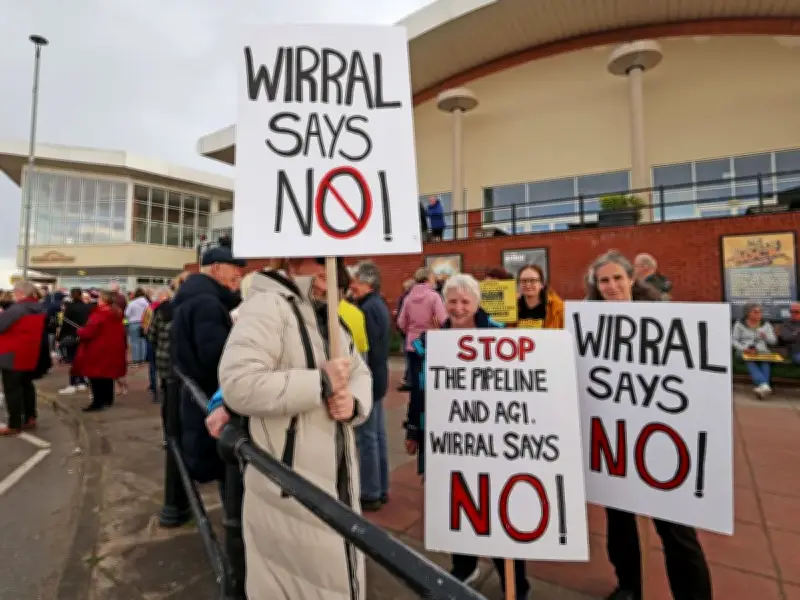
Major changes have been made to the controversial plans for a proposed gas pipeline that would cut through Wirral, with developers saying the project has been "significantly reduced." People are being urged to have their say on the £5bn Peak Cluster carbon capture project in the coming weeks.
The project would take carbon dioxide from lime and cement manufacturing sites in Derbyshire and Staffordshire offshore to be stored under the Irish Sea. It has proved highly controversial in Wirral and beyond, with developers pointing to the millions of tonnes of CO₂ emissions that would be saved each year, while locals raise concerns over potential environmental and safety issues.
Compressor Station Replaced by Smaller Infrastructure
Originally, the plans for Wirral included a four-to-five-storey compression facility with a 50m tall chimney across an area the size of seven and a half football pitches near Meols or Moreton, referred to as an Above Ground Installation (AGI).
After reviewing comments from a previous consultation and the findings of engineering assessments, technical studies, and environmental surveys, the project team identified an alternative technical solution for transporting CO₂ through the network in Wirral, removing the need for the compression infrastructure originally proposed.
Reduced Footprint and New Consultation
New proposals for Wirral include a smaller AGI covering around 80m x 80m and a Block Valve Station (BVS) around 25m x 25m. Combined, the area required is a reduction of over 85% from the originally planned compressor station. The chimney has also been reduced to a maximum height of 10m, from the originally proposed 50m.
David Parkin, CEO of Peak Cluster Ltd, said: "Developing major infrastructure projects is best achieved through an iterative design process. As we receive feedback from communities and stakeholders and increase our understanding of the engineering, environmental and operational requirements, the design of the project develops."
Another round of consultation has been announced, inviting feedback on the new project boundaries and the proposed locations of AGIs, BVSs, and temporary areas required for access and construction in most locations. A consultation event will take place in Port Sunlight's Hulme Hall on December 3, and an online webinar on November 23.
Mr Parkin added: "Those who live, work and spend their free time in an area, know it best. Listening to communities and stakeholders, understanding their views and gathering local knowledge is an essential part of our approach to developing the Peak Cluster project."