
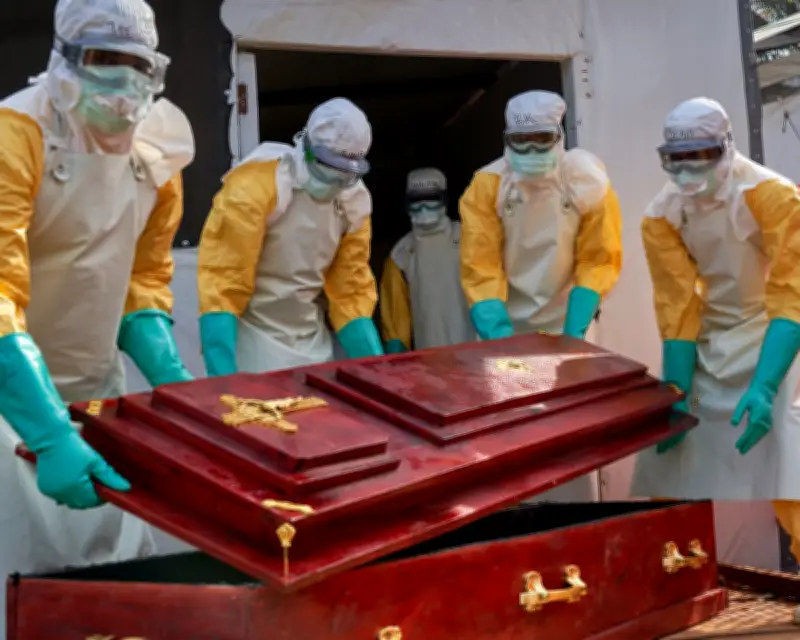
The Bundibugyo virus outbreak in the Democratic Republic of the Congo has so far resulted in more than 1,250 cases and at least 362 deaths, yet it has received far less attention than the Andes virus outbreak on a cruise ship. The virus, a relative of the Zaire Ebola virus, causes sudden symptoms including headaches, diarrhoea, kidney and liver failure, and internal and external bleeding. Contagiousness persists after death, exposing family members who prepare the body for burial.
Immediate Response and Future Questions
Health workers are currently focused on containing the outbreak through patient isolation and contact tracing, as no proven vaccine exists for Bundibugyo virus. Once the outbreak is controlled, two critical questions remain: why did this happen, and where did the disease come from? Answering these is essential to prevent or mitigate future outbreaks.
Unknown Wildlife Reservoir
Although Marburg virus is known to persist in fruit bats, and bats are often assumed to be the reservoir for Ebola viruses, proof remains elusive. The first human cases in past Ebola outbreaks have been linked to exposure to forest antelopes, gorillas, chimpanzees, and even pigs. It is also possible the virus can hide in the same host for years before re-emerging.
Challenges in Research
Determining Bundibugyo virus transmission patterns in tropical forests is extremely difficult. Researchers must decide whether to capture monkeys, analyse faeces, or target bush pigs or fruit bats. Political unrest and funding cuts by the US and UK further complicate research efforts.
Trend Toward Larger Epidemics
Before 2010, the largest Ebola outbreaks rarely exceeded 300 cases. Since then, three outbreaks have involved thousands of cases. Understanding the virus's ecology could allow for mitigation measures such as wildland buffers, discouraging consumption of wild animals, or integrated surveillance programmes.
Risks of Misguided Retaliation
If the wildlife source is unknown, local animals may suffer needless retaliation, as seen after COVID-19 when bat roosts were attacked in Cuba, Rwanda, and other countries. Such actions can worsen disease spread if the targeted species is not the reservoir, and habitat destruction may be a driver of outbreaks.
One Health Approach
The links between humans, wildlife, and environment are central to the “one health” approach, which recognises that optimising health for one element can benefit others. This outbreak may provide the incentive to act to prevent future epidemics, applying lessons locally to issues like chicken farms, wild swimming, or bovine tuberculosis.




