UN Secretary-General António Guterres has declared that the resources of the clean energy era cannot be blockaded or weaponised, highlighting a critical moment for global energy security. This statement comes as Australia faces mounting pressures from volatile fossil fuel markets and escalating climate threats.
National Security Risks and Classified Climate Report
It has been three years since the Albanese government received a classified report from the Office of National Intelligence examining how the climate crisis could fuel national security threats. Despite calls for transparency, the report remains undisclosed to the public, with only a redacted version hinted at in briefings for independent MPs.
Senator David Pocock described the findings as "frankly terrifying," warning that Australia is woefully unprepared for impending challenges. A separate national climate risk assessment has echoed these concerns, predicting cascading economic shocks from supply chain disruptions and energy system failures.

Real-Time Fallout from Middle East Conflict
The ongoing illegal air war in the Middle East, with its shifting and often incoherent rationale, has provided a stark taste of these risks. Beyond the devastating human cost, the conflict underscores the perils of dependence on the global fossil fuel trade.
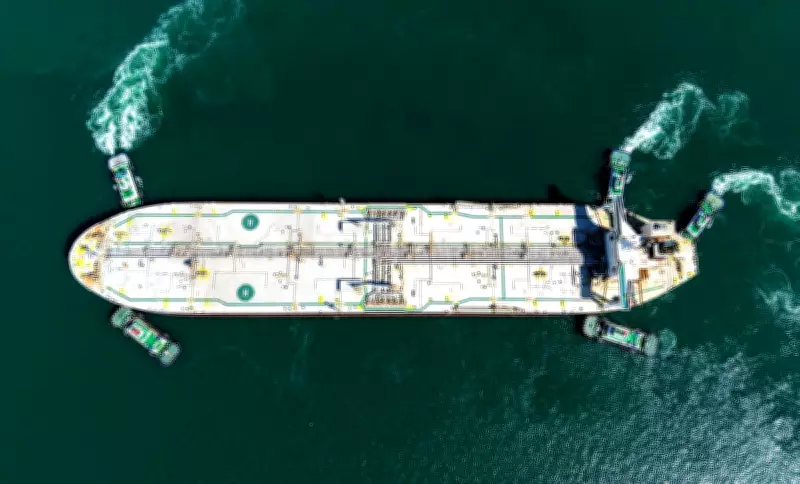
Oil prices are fluctuating wildly in response to geopolitical tensions, including remarks from Donald Trump and the closure of the Strait of Hormuz, a vital corridor for about one-fifth of the world's seaborne oil and liquefied natural gas. In Australia, Climate Change and Energy Minister Chris Bowen has assured the public that fuel supplies remain secure, despite reports of regional service stations running dry and a surge in diesel demand, with increases of 100% in Mildura and 238% in the Barossa.
Fuel Stockpiling and Supply Concerns
Fear-driven stockpiling has exacerbated the situation, as Australia holds only 32 days' worth of diesel and operates just two refineries. This vulnerability has prompted questions in parliament about petroleum sufficiency, yet the focus remains narrowly on immediate needs rather than long-term solutions.
Independent MP Nicolette Boele was among the few to challenge this backward-looking approach, asking what more can be done to reduce reliance on petrol and diesel and accelerate electrification.
Renewable Energy as a National Security Asset
Experts like climate activist Bill McKibben and economist Paul Krugman argue that renewable energy offers a path to independence from volatile regions, noting that sunlight and wind do not need to transit conflict zones like the Strait of Hormuz. Guterres emphasised that countries now have an "exit ramp" from past oil shocks, with homegrown renewables becoming cheaper and more scalable.
Minister Bowen has echoed this sentiment, stating that solar and wind energy cannot be interrupted by crises like those in the Middle East or Russia's invasion of Ukraine. He highlighted progress in Australia, including a tripling of electric vehicle sales and an increase in renewable electricity from 35% to nearly 44%, which has halved summer reliance on gas power plants.
Government Initiatives and Policy Challenges
The government has pledged a $1.1 billion program to produce low-carbon alternatives to liquid fossil fuels using feedstocks such as canola and sugar. However, there is uncertainty over its commitment, with reports suggesting potential rollbacks of subsidies for household batteries and fringe benefits tax exemptions for electric vehicles under $91,000.
While these policies have proven costly and favoured the well-off, their original intent remains valid. Household batteries enhance grid stability and maximise solar energy use, while electric vehicle incentives address Australia's lagging uptake compared to global standards.
Accelerating Climate Crisis and Urgent Action
The climate crisis is intensifying, with studies showing global temperatures rising at 0.35°C per decade, up from 0.2°C, and sea levels potentially higher than previously modelled. This acceleration underscores the need for swift action to transition to cleaner energy sources.

Making this shift would not only reduce costs and improve health but also insulate Australians from the whims of volatile fossil fuel markets. As Adam Morton, Guardian Australia's climate and environment editor, notes, there is little point in waiting for the future when it is already here.