
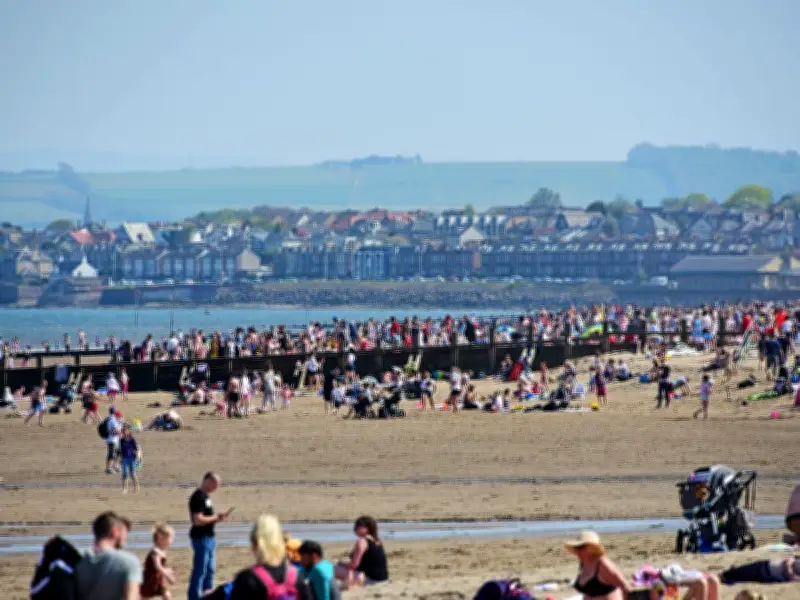
Forecasters are predicting further hot spells for the UK after temperatures broke records this week, with Scotland recording its hottest day of 2026. On Thursday, June 25, a high of 31.2°C was recorded in Threave, Dumfries and Galloway, just off Scotland's record high for June of 32.2°C. Many Scots welcomed the change in weather before it turned again.
Mixed Weather Patterns
The weather across the UK has been a mixed bag this month. While the end of May brought sunshine and sizzling temperatures, this quickly switched to downpours and much cooler mercury levels for the first half of June, which marked the beginning of meteorological summer. However, conditions changed once again as a heatwave traveled across Europe and into parts of the UK. While Scotland's temperatures were lower than the rest of Europe, mercury levels still soared into the 30°C mark in some areas.
Seasonal Forecasts
At the beginning of June, a three-month summer outlook was released, predicting "higher-than-normal" chances of hotter weather during June. While weather predictions can change quickly, the BBC reports that these seasonal forecasts have proved accurate so far. Looking toward the rest of summer, which runs until the end of August, meteorologists suggest an "increased chance of heatwaves and heat-related impacts." Additionally, "significant bursts" of heat are expected across Europe and the UK during July and August.
Heatwave Criteria in Scotland
According to the Met Office, the criteria for a heatwave in Scotland is that temperatures need to reach 25°C or more for three consecutive days in the same area. Whether this criteria is met or not, the Met Office has stated that compared to the period 1991–2000, the UK is now twice as likely to have a hotter summer. This is consistent with climate change, as the Earth's baseline temperature shifts higher, making heatwaves hotter, longer-lasting, and more frequent.
Future Projections
According to projections by the national forecaster, if global warming continues at its current pace, highs in the mid-forties Celsius could be a serious possibility in the UK by 2050. Even more worryingly, new analysis from the World Weather Attribution (WWA) has found that extreme weather in June would have been "impossible just a few decades ago." Experts warn that if changes are not made now, human-induced climate change will continue to unravel current weather patterns.
Dr Akshay Deoras, senior research climate scientist at the University of Reading, told the BBC: "Unless we drastically cut down the emission of greenhouse gases, global warming is not going to stop. In fact, it will accelerate."




