
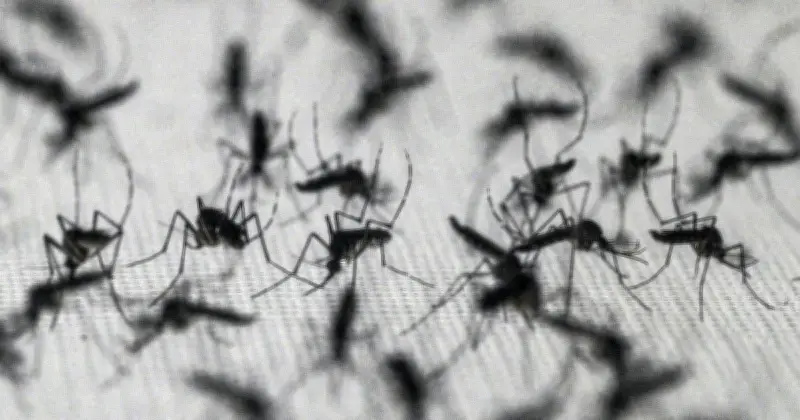
Britain's third heatwave of 2026, with temperatures reaching the low-to-mid 30Cs across parts of southern England, has raised concerns that the yellow fever mosquito (Aedes aegypti) could become established in the country. The species is capable of spreading diseases including yellow fever, dengue, chikungunya and Zika virus, but is not currently established in the UK and there is no evidence of local transmission.
The UK Health Security Agency (UKHSA) has recorded several detections of invasive mosquitoes in recent years. Yellow fever mosquito eggs were found at a freight storage facility near Heathrow Airport in 2023, while the Asian tiger mosquito—a related invasive species—was discovered at a motorway service station in Kent in 2024. Searches for the term “yellow fever mosquito” have surged by 5,000% over the past week.
Expert warning
Luke Newnes, a garden expert at Hillarys, said: "A prolonged hot spell followed by muggy, still nights is exactly the kind of weather that lets mosquito eggs develop quickly, and most gardens are unknowingly full of the standing water they need." He added: "People are watering pots, filling water butts and topping up bird baths to get through the heat, and every one of those is a potential nursery if it's left untouched for more than a few days. It only takes a small change in habits to close that door."
Common breeding sites
Gardening experts say many common mosquito breeding sites are hiding in plain sight. Water butts and rain barrels, plant pot saucers, bird baths, blocked gutters, paddling pools, buckets and even children's toys left outside can collect enough standing water for mosquitoes to lay eggs. Bird baths and ornamental water features should be emptied and refilled regularly to prevent larvae developing.
Three simple steps
Gardeners are being encouraged to take three simple actions to reduce the risk. First, cover water butts and other water storage containers with a secure lid or fine mesh to prevent mosquitoes reaching the surface. Second, empty plant saucers, buckets and any other containers holding water every three or four days. Yellow fever mosquito eggs typically need around a week to develop into adults, so regular emptying breaks the breeding cycle. Third, clear blocked gutters and check for hidden puddles after rainfall, including dips in paving, tarpaulins and other areas where water can collect unnoticed.
Experts also recommend fitting flyscreens to external doors to help prevent mosquitoes and other flying insects entering homes during warm weather. While the yellow fever mosquito has yet to establish itself in Britain, scientists have warned that rising temperatures and more frequent hot, humid weather could make conditions increasingly favourable for invasive mosquito species in the years ahead. For now, removing standing water remains one of the simplest and most effective ways for households to help stop mosquitoes breeding during the summer heat.




