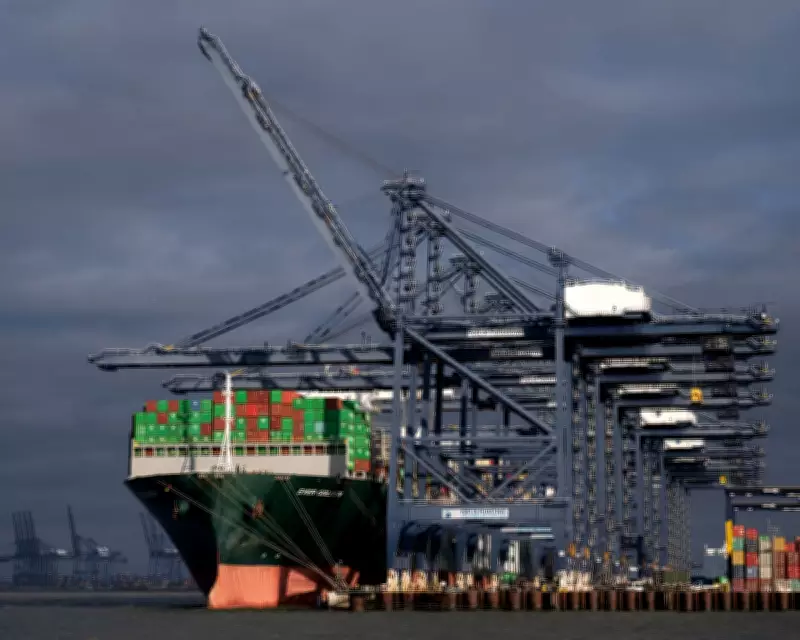
UK Food Security Faces Critical Threat from Import Dependence
Britain's heavy reliance on imported food and fertiliser has placed national food security in a precarious position, according to recent expert warnings. This vulnerability threatens to trigger food shortages, drive up prices, and potentially spark civil unrest, as global ecosystems face irreversible collapse.
Intelligence Warnings Suppressed by Government
Caroline Lucas, former Green Party MP, has highlighted a suppressed report from the Joint Intelligence Committee (JIC) that outlines "cascading risks" from the degradation of critical global ecosystems. The government initially attempted to withhold this document before releasing a heavily redacted version, which still warned that six ecosystems vital to UK national security are "on a pathway to collapse," some within five years.
"The UK's heavy reliance on food and fertiliser imports means our food security is particularly at risk," Lucas emphasized, noting that this dependency makes Britain especially susceptible to international supply chain disruptions.

Political Responses to National Resilience Debate
The food security concerns emerge amid broader political discussions about national resilience initiated by Prime Minister Keir Starmer. While Starmer warned against being "at the mercy of events abroad," critics note his failure to address nature-related threats specifically.
Molly Scott Cato, former MEP, pointed to Brexit as a fundamental contributor to current vulnerabilities. "With the US proving an increasingly unreliable ally and data showing the appalling economic carnage caused by our decision to leave the EU, the tenth anniversary gives us the perfect opportunity to change our minds," she argued, advocating for renewed EU membership.
Climate Crisis Exacerbates Supply Chain Vulnerabilities
Dr. Tracey Elliott from Beckenham warned that climate change compounds these security challenges. "Global warming and extreme weather events are compromising our food and energy supply chains, as well as our national security," she noted, expressing concern that government energy policies might prioritize fossil fuels over sustainable alternatives.
The National Risk Register currently identifies 89 distinct threats, with food security emerging as particularly urgent given Britain's import-dependent agricultural system.
Proposed Solutions for Enhanced Resilience
Experts propose several measures to strengthen national resilience:
- Government transparency about nature-related risks
- Reversal of climate finance cuts and support for global conservation initiatives
- Diversification of food supply chains with incentives for domestic production
- Development of comprehensive climate and nature resilience plans
- Whole-of-society approach involving all government levels, businesses, and households
Toby Harris, Chair of the National Preparedness Commission, stressed that "only with a concerted national effort can we build the sort of whole-of-society resilience to withstand international shocks." He emphasized the need for hard choices and public support through the promised "national conversation" in strategic defence reviews.
Dr. Victor Ajuwon from Cambridge applauded Starmer's direct communication approach but warned against reactive policymaking on issues like immigration, which might inadvertently amplify political opponents' influence.
As geopolitical tensions rise and global supply chains fragment, Britain faces mounting pressure to transform its approach to food security from efficiency-focused imports to resilient, diversified systems that can withstand multiple converging crises.