
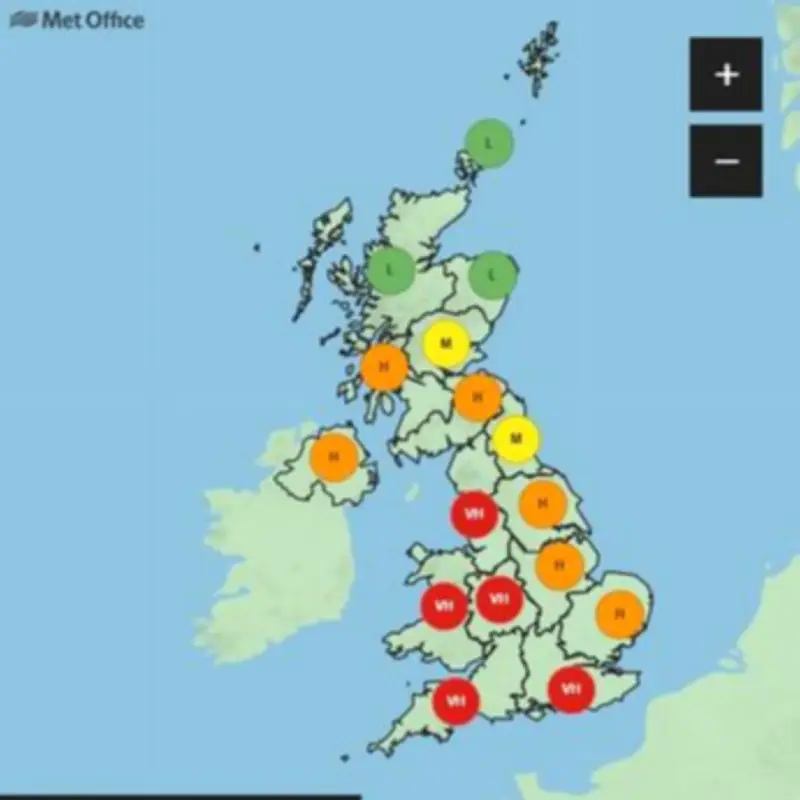
The Met Office has issued pollen alerts across large parts of the UK, with five areas facing red 'very high' warnings over the next five days, including Greater Manchester.
During spring and summer, the Met Office publishes a five-day pollen forecast ranking levels from low to very high to alert hay fever sufferers when symptoms may worsen. Over 10 million Brits suffer from hay fever, an allergy to airborne pollen particles released by plants, typically worst between March and November. Different types of pollen include grass, weed, and tree, and individuals may be allergic to specific types.
Red and Amber Alerts This Week
According to the Met Office, pollen levels will build over the coming days. On Saturday, June 13, a red 'very high' alert is in force for London and South East England. On Sunday, June 14, three red alerts cover London and South East England, Wales, and South West England. On Monday, June 15, North West England and West Midlands join the highest alert. By Tuesday, June 16, and Wednesday, June 17, red alerts are replaced by amber 'high' alerts.
Full List of Alerts by Day
Saturday, June 13
- Red alerts: London and South East England
- Amber alerts: Wales, South West England, West Midlands, East Midlands, East of England
Sunday, June 14
- Red alerts: Wales, South West England, London and South East England
- Amber alerts: Northern Ireland, North West England, Yorkshire and Humber, East Midlands, West Midlands, East of England
Monday, June 15
- Red alerts: London and South East England, Wales, South West England, North West England, West Midlands
- Amber alerts: Northern Ireland, Strathclyde, Yorkshire and Humber, East Midlands, East of England
Tuesday, June 16
- Amber alerts: Northern Ireland, Yorkshire and Humber, East Midlands, East of England, London and South East England, North West England
Wednesday, June 17
- Amber alerts: London and South East England, South West England, West Midlands, East Midlands, East of England
Hay fever sufferers are advised to take precautions such as wearing sunglasses, showering after being outdoors, and keeping windows closed during high pollen counts.




