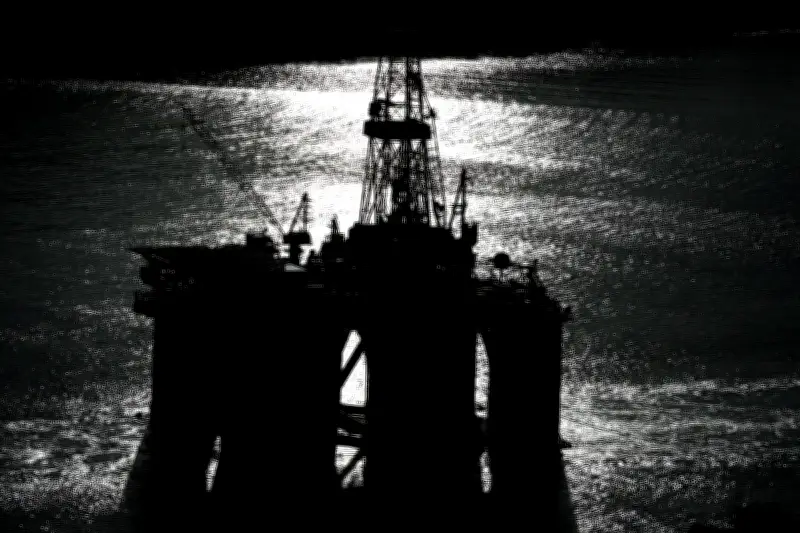
Ten trade unions, collectively representing millions of British workers, have joined forces to urge Andy Burnham to reject plans for drilling in the controversial Rosebank oil field. The unions, including Unison, the Public and Commercial Services Union, the actors’ union Equity, and the Fire Brigades Union, insist that “the Labour Government must do the right thing by the planet, UK communities and workers, and stop Rosebank”.
Key test for government climate credibility
The decision on whether development of Rosebank, the largest untapped oil field in the North Sea, can proceed is seen by environmentalists as a key test of the Government’s credibility on climate change. A report this week for developers Adura warned that failing to develop both Rosebank, which lies north west of Shetland, and the Jackdaw gas field to the east of Aberdeen, could cost the UK economy some £10.8 billion by 2035.
Conservative leader Kemi Badenoch called for the Prime Minister to “stop faffing about” and approve drilling in the North Sea. However, Unison general secretary Andrea Egan said the Government “needs to accept that the more fossil fuels we burn, the more extreme our weather will become”.
Union leaders speak out
Ms Egan added that public service workers, including those represented by Unison, are “on the frontline of extreme weather” and need “guarantees that the Government is serious about tackling climate change”. She was clear: “The Prime Minister must act in the best interests of the country and reject Rosebank.”
Ed Harlow, president of the National Education Union, another union making the plea, called on the Prime Minister to “listen to public sector workers who experienced what it’s like to try and teach children, care for the sick and elderly, and keep this country moving in extreme heat”. He insisted: “There is nothing ‘pragmatic’ in knowingly making these conditions worse, just so a handful of oil and gas firms can keep profiting. Approving Rosebank, after the summer we’ve had, would be outright arson.”
Workers describe frontline impacts
His comments came as Alex Heard, a teacher from Norwich, told the Prime Minister that “the climate crisis has pushed our schools to breaking point” this year. He said: “As a science teacher, it is crystal clear that we can have no new oil and gas if we are to avoid breaching catastrophic tipping points.”
NHS occupational therapist Jordan Rivera said “critical” operations had had to be cancelled during heatwaves this summer, with A&E departments and ambulances also “hit with record demand”. Lee Hunter, regional chair for the north-west of the Fire Brigades Union, insisted the UK is “not prepared for the extremes we’re seeing”.
Mr Hunter stated: “Whether it’s record wildfires this summer, or the increase in flooding we’re dealing with in winters, firefighters are on the frontline. This is the new normal, and we’re stretched to our limits. That’s why our union is saying no to Rosebank. It will just pour more fuel on the fire, making an already difficult job impossible.”
Campaigners and government respond
The intervention was welcomed by environmental campaigners, with Lang Banks, director of WWF Scotland, saying: “Trade Unions and their members play a vital role in shaping climate action in this country. And we agree with those who say that, after a summer of extreme heat and devastating wildfires, it would be irresponsible to approve new oil and gas developments that would accelerate climate change and do nothing to lower the energy bills of UK households.”
A spokesperson for the UK Government’s Department for Energy Security and Net Zero said: “We do not comment on speculation. The North Sea remains a vital national asset and oil and gas will continue to play an important role in our energy system for decades to come – alongside transitioning to clean power to protect jobs and tackle the climate crisis. Any decision will take into account all relevant evidence, including environmental assessments and public representations received during the consultation process.”