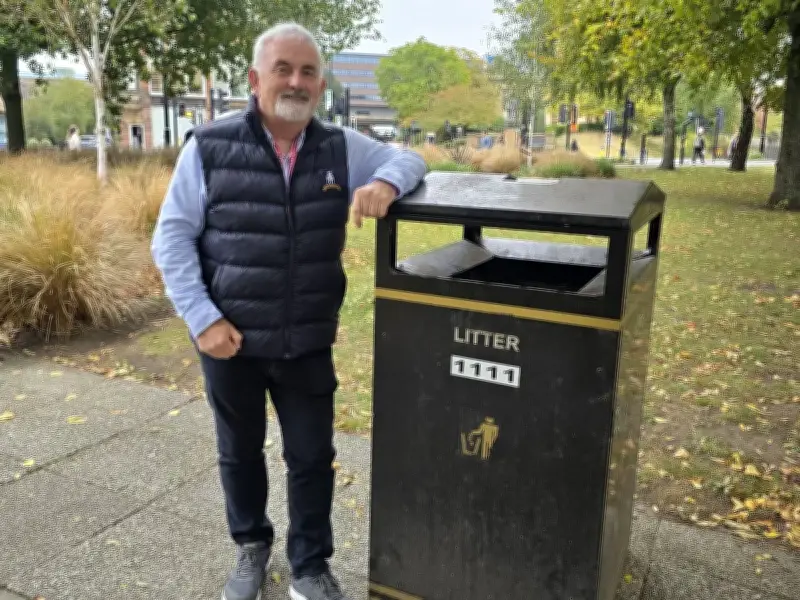
Newcastle could see up to two additional litter bins installed in every ward under new proposals, with the bins equipped with smart sensor technology that monitors fill levels and predicts when they will reach capacity.
The sensors use intelligent software to forecast when a bin will be full. Collections are then automatically scheduled when bins are expected to be almost full, typically at around 90% capacity. The system continuously learns and adapts to changing patterns of use.
Residents would also be able to view information about their local bins online, including fill levels and the next scheduled collection date.
Cabinet to review policy
The proposals will be discussed by the Cabinet at Newcastle City Council. Councillor Peter Lovatt, Cabinet Member for Neighbourhood Services, said: "Keeping our neighbourhoods clean and attractive is a priority for the council, and this investment would help us achieve that while making the best use of technology and public resources."
He added: "Our smart bin network is already helping us understand how people use litter bins across the city and allowing us to target collections where they are needed most. By expanding both the number of bins and the technology that supports them, we could deliver a more efficient service and respond more effectively to local demand."
The proposals follow concerns raised by residents and ward councillors about litter bin provision in some areas of the city. The report will be brought before Cabinet to review the council's litter bin policy and assess options for increasing capacity across the city.
Data-driven decisions
As part of the new approach, councillors would receive access to relevant operational information relating to requests within their wards, including bin fill levels, collection frequencies and other data used to inform decisions about new installations and replacements. Council officers would then work with ward members to identify suitable locations for any new bins.
To ensure bins can be safely serviced, installations will only take place on adopted highways or council-owned land and must be located on suitable hardstanding with safe access for collection vehicles and staff.
The initial cost of installing new bins or relocating existing ones would be met through funding approved by Cabinet in July 2026 as part of the administration's priority investment programme. Ongoing emptying and maintenance costs would be met from existing budgets within the council's Neighbourhoods, Waste and Parks service.