
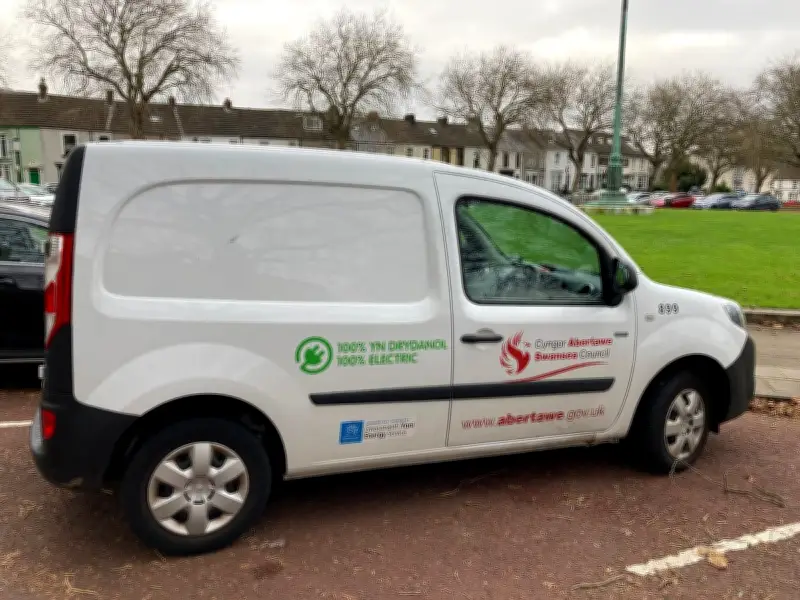
Swansea Council now has more than 150 electric and hybrid vehicles but is unlikely to replace all its fleet by 2030 as planned. The newcomers include three electric refuse lorries which are performing well although their range was impacted by very hot weather in recent weeks, a council scrutiny group heard.
Fleet transition challenges
The council has a policy commitment to replace its fleet with electric models by 2030 as part of a wider ambition to reduce its net carbon emissions to zero that year. Fleet manager Mark Barrow said most vehicles could transition to battery-powered ones but finances and resources were challenging, along with a seven-year vehicle replacement cycle. “I don’t think any fleet in Wales will meet the 2030 target,” he said.
A report before the panel said the council had 1,003 vehicles – 82 fewer than a year previously – of which 134 were battery-powered and 21 were hybrids. Mr Barrow said replacing HGV vehicles with electric versions delivered big results in terms of emissions reductions.
Buildings and solar farm
Councillor Andrea Harrington, cabinet member for service transformation, said the council had picked off “the low hanging fruit” early on and that delivering larger emission-reducing schemes was trickier because of costs. A council report last December estimated retrofitting buildings to cut operating emissions would cost around £178 million. She stressed the council still supported the 2030 net zero ambition and was working with a private company on a solar farm scheme at the former Tir John landfill site, approved in June 2023 but not yet built.
Emissions progress
Overall the council reduced its carbon emissions by 23.5% between 2019-20 and 2024-25, with 2025-26 results to be published later. For the last three years all the council’s electricity has been from renewable sources within Wales. Council chiefs have consistently lobbied for more central Government funding to achieve the 2030 transition.




