Suzanne Simard's Revolutionary Vision for Forest Ecology
In 2018, ecologist Suzanne Simard found herself in a perilous situation in the Caribou Mountains of western Canada. While conducting research with her two teenage daughters and colleague Jean Roach, a thunderstorm ignited a wildfire, forcing them to flee half a kilometre to safety. As they ran, animals like deer and wolves burst from the forest, and helicopters circled overhead to combat the flames. This harrowing experience underscored the growing threat of wildfires in Canada, which have escalated due to global heating and changes in forest composition from logging practices.
The Escalating Wildfire Crisis in Canada
Wildfires have become increasingly severe in Canada, with records broken in 2018, 2021, and 2023. The 2023 fires consumed an area three times the size of Nova Scotia, with smoke reaching as far as New York City. Simard attributes this not only to hotter, drier summers from climate change but also to the replanting of fast-growing conifers by logging companies, which are more flammable than native, diverse forests. For decades, policymakers assumed human activity had minimal impact, but deforested areas fail to fully recover, turning Canada's forests from carbon sinks into net carbon emitters since 2001.
Simard's Groundbreaking Research on Forest Communication
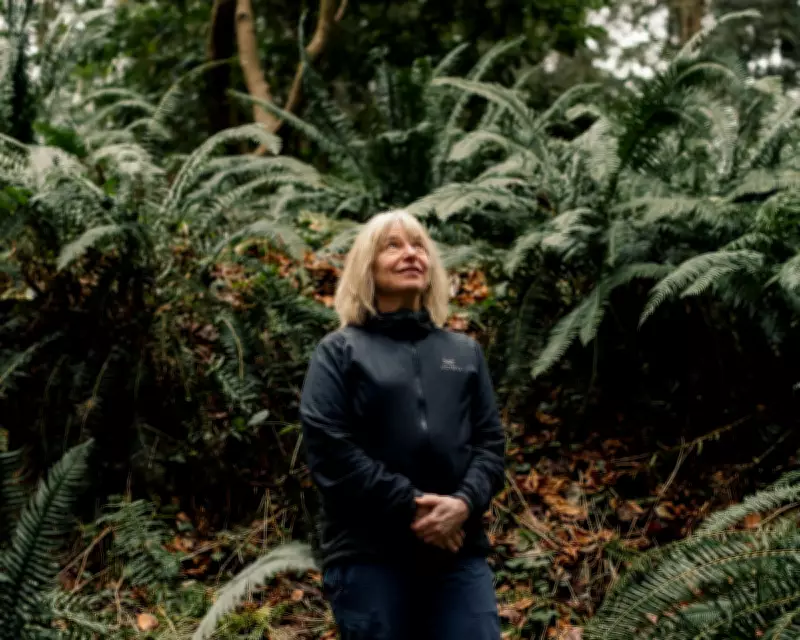
For over four decades, Simard, a professor at the University of British Columbia, has advocated for a new understanding of forests. Her research, popularised in her 2021 book Finding the Mother Tree, suggests trees are perceptive, collaborative beings that communicate through underground fungal networks called mycorrhiza. She coined the term "mother trees" to describe the oldest, most connected trees that nurture surrounding forests, a metaphor inspired by cultural traditions and developed with colleagues in a bar. This challenges the traditional view of forests as collections of competing individuals, proposing instead that they are interdependent communities.

From Logging Industry to Academic Pioneer
Simard, now 65, grew up in British Columbia's Monashee Mountains, where her family worked as loggers. She entered the industry in the early 1980s, often as the only woman on staff, before earning advanced degrees in forest ecology. Her observations in replanted forests led her to question standard practices, such as using herbicides to kill competing plants. She discovered that seedlings thrived better alongside other species, with mycorrhiza playing a key role in nutrient exchange. In 1997, her landmark paper in Nature, titled "The wood wide web," gained international attention for its insights into forest intelligence.
Backlash and Resilience in the Scientific Community
Despite her success, Simard faced brutal backlash after publishing The Mother Tree. Critics accused her of lacking scientific integrity, with some writing to her university and media outlets to discredit her work. She compares this resistance to that faced by figures like Jane Goodall and James Lovelock, noting it often targets revolutionary ideas that challenge mainstream science. Simard initially retreated, keeping her camera off in Zoom calls, but she has since responded to critiques in academic papers. She argues that science's slow pace and narrow focus hinder urgent climate action, advocating for more creative, holistic approaches inspired by Indigenous wisdom.
The Mother Tree Project and Sustainable Forestry
Since 2015, Simard has led the Mother Tree Project, a national study exploring sustainable logging practices. It suggests that leaving behind mother trees and avoiding clear-cutting can enhance forest regeneration. Her latest book, When the Forest Breathes, blends science with memoir, covering topics from her breast cancer recovery to personal losses, reflecting on life and death in nature. She highlights Canada's progressive stance on assisted dying and calls for public agency in addressing climate change, despite geopolitical tensions that may prioritise resource extraction.

Looking Ahead: Hope and Challenges
Simard remains hopeful, buoyed by public pressure for better forestry practices. She notes that climate change's tangible effects, like wildfires, make it real for Canadians, though defeatism poses a challenge. After her book tour, she plans a sabbatical in Nelson, British Columbia, to reconnect with the forests she loves. Living alone with her daughters at university, she emphasises the importance of intuition and deep wisdom in understanding nature. As wildfires threaten her hometown due to unusually warm weather, her work continues to inspire a reimagined relationship with the environment.