Summer 2026 was the warmest in the UK since records began nearly 150 years ago, according to provisional figures from the Met Office. The national weather agency recorded an average temperature of 16.5C for June, July and August, 0.4C higher than the previous record set in 2025.
The data, collated annually since 1884, shows the top six warmest summers on record have all occurred this century, including three this decade: 2026 in first place, followed by 2025, 2018, 2006, 2003 and 2022.
Climate change makes extreme heat more likely
Climate change compounded the weather, making this year's heat a "one in nine year event" and increasing the likelihood of devastating consequences such as droughts and wildfires in the years to come. The summer featured several days of near-40C temperatures across five distinct heatwaves and record-low rainfall.

England and Wales had their driest Julys on record, and southern England experienced its driest month ever recorded since 1836. In July, the Met Office issued a rare red alert for extreme heat as temperatures peaked at 38C in Lingwood, Norfolk, a new record high for that month.
Record temperatures and wildfires
The UK Health Security Agency (UKHSA) estimates the extreme conditions resulted in 2,877 deaths across England in May and June alone. The latest heatwave in mid-August pushed temperatures to 38.1C at Kew Gardens on August 13, the hottest day of the year and the first time 2026 saw three separate days exceeding 37C.
Met Office head of climate attribution, Dr Mark McCarthy, said: "The summer of 2026 has been remarkable and is an example of the extremes we can expect to see more frequently as a consequence of human induced climate change." He added: "Our analysis shows a summer like the one we’ve just experienced is now around 130 times more likely because of climate change. In a climate unaffected by human emissions of greenhouse gases, a summer like this would be exceptionally unlikely – one in over 1,000 years."
In the current climate, he said, such a summer should be expected roughly once every nine years.
Wildfires and drought persist
The punishing heat and lack of rainfall led to widespread wildfires. A blaze in the Cairngorms mountain range in Scotland started in mid-July and burned for over a month across 10 square miles of moorland and forestry. A fire on hills above Blaenavon in south Wales started in late July and continued for several weeks. In mid-August, 19 homes in Stourbridge were destroyed by wildfires.
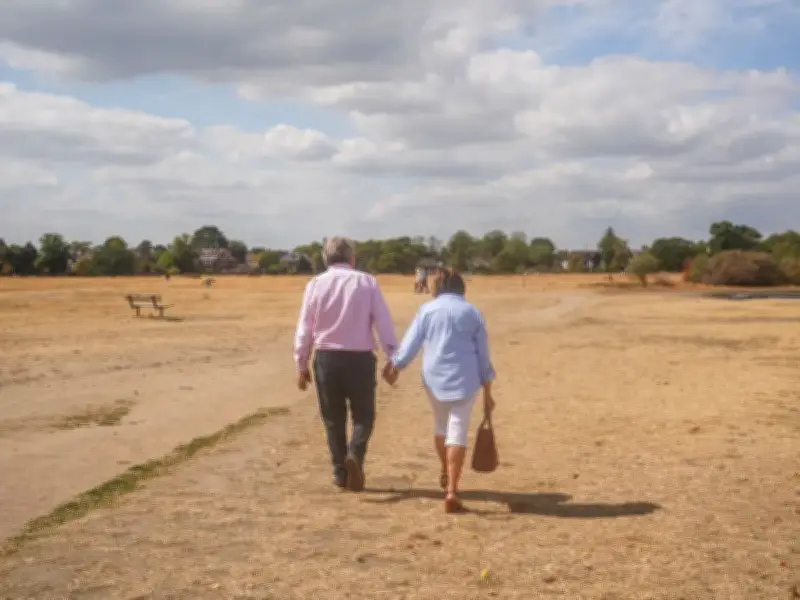
Fire and rescue services in England and Wales responded to 1,132 wildfires by August 16, surpassing the 1,017 total for the whole of 2025, according to the National Fire Chiefs Council. The Met Office station at Wisley in Surrey recorded 62 consecutive days without rain, while stations at Heathrow Airport in London and Odiham in Hampshire recorded dry spells lasting 56 days.
Katie White, Minister for Climate Transition, said: "Our hottest summer ever is a brutal reminder that we’re not waiting for climate change to arrive in Britain, we’re living in the middle of it. With kids too hot to sleep, families worrying about older relatives, farmers watching fields dry out, and firefighters and our Armed Forces battling wildfires, we’ve all woken up to a reality none of us wants for the people and places we love."
She added: "That makes us more determined to act, with some of the biggest and boldest action in a generation to electrify our economy and tackle climate change with clean energy made in Britain."
Drought conditions and water restrictions
Most of England and all of Wales remain officially in drought, except the North East, North West and Yorkshire. Bristol Water last week became the latest company to announce a hosepipe ban, meaning around 30 million people in England now have water use restrictions.
Reservoir storage in England stands at 60%, 18 percentage points below the average for this time of year. Nine reservoirs are classed by the Environment Agency as having exceptionally low levels, including Wimbleball and Clatworthy in Somerset (37% and 40% storage), Ardingley in West Sussex (44%) and Hanningfield in Essex (49%).

No droughts have been declared in Scotland or Northern Ireland, though two areas in south-west Scotland have "significant scarcity" of water, according to the Scottish Environment Protection Agency. The National Drought Group continues to meet weekly to coordinate action and monitor risks.
Earlier this month, the Government announced a £65 million package to support farmers, who have reported their earliest harvest in 20 years, with yields impacted by intense heat stress and dry weather.