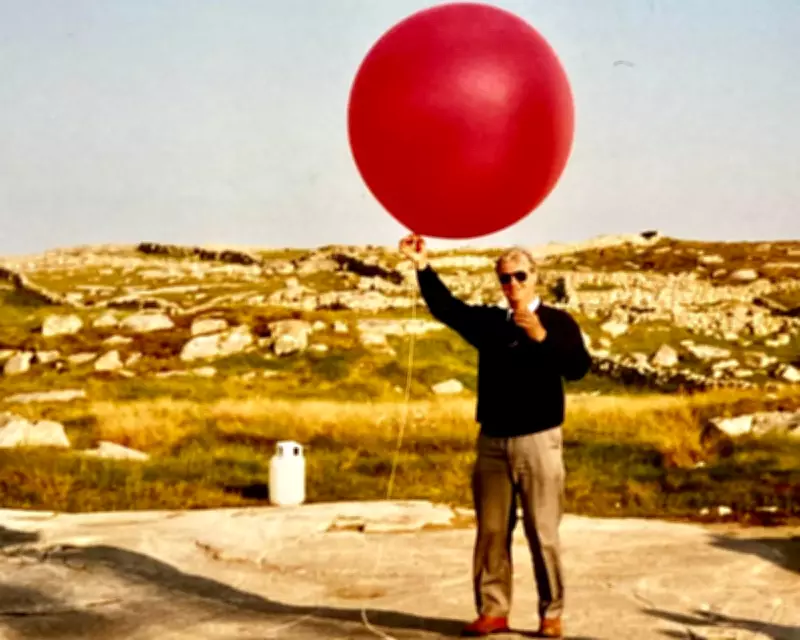
Stuart Penkett: Pioneering Atmospheric Chemist and Environmental Champion
Stuart Penkett, an esteemed atmospheric chemist whose laboratory investigations were instrumental in pinpointing the origins of acid rain and the ozone layer hole, has passed away at the age of 87. His seminal work not only revolutionised scientific comprehension of atmospheric pollution but also laid the groundwork for critical international environmental accords.
Landmark Discoveries in Acid Rain and Ozone Depletion
In 1979, Penkett and his colleagues at the Atomic Energy Research Establishment in Harwell, Berkshire, published a pivotal paper in the journal Atmospheric Environment. This research elucidated how sulphur dioxide, predominantly emitted from industrial activities, undergoes conversion into sulphuric acid within clouds, subsequently precipitating as acid rain. Throughout the 20th century, acid rain inflicted severe environmental damage, decimating aquatic ecosystems and forests while corroding infrastructure across Europe and North America, where pollutants accumulated over industrialised regions.
During the 1980s, while based at the University of East Anglia in Norwich, Penkett shifted his focus to the mechanisms governing ozone production and destruction in the Earth's atmosphere. His meticulous measurements were crucial in identifying the detrimental role of chlorofluorocarbons and other ozone-depleting substances. This research significantly contributed to the successful enactment of the 1987 Montreal Protocol, an international treaty aimed at safeguarding the ozone layer by phasing out these harmful compounds. The protocol achieved universal ratification by all United Nations member states, marking a historic milestone in global environmental cooperation.

A Distinguished Career and Lasting Legacy
Born in Eccles, Lancashire, Penkett excelled academically, graduating with a chemistry degree from Leeds University in 1960 and earning a PhD in chemical kinetics. His professional journey included postdoctoral research in the United States, a stint at Unilever, and key roles at the Atomic Energy Research Establishment and the University of East Anglia, where he became a professor of environmental sciences in 1990.
Penkett's contributions extended beyond his discoveries. He established the Weybourne Atmospheric Observatory on the Norfolk coast, now part of the World Meteorological Organisation's Global Atmosphere Watch network. He also spearheaded the development of the UK Met Office's C-130 aircraft into the Facility for Airborne Atmospheric Measurements, an advanced airborne laboratory for atmospheric chemistry analysis. Furthermore, he orchestrated the first coordinated national programme for atmospheric chemistry in the UK, setting a precedent for future global research initiatives.
His accolades include the Gaskell Memorial Medal from the Royal Meteorological Society in 1987 and the prestigious Haagen-Smit award in 2003, often regarded as the Nobel Prize of air quality research. Penkett also served on the Intergovernmental Panel on Climate Change, advised governments, and mentored numerous young scientists, fostering the next generation of environmental researchers.
Stuart Penkett is survived by his wife, Marigold, three of their four children, and five grandchildren. His pioneering work continues to resonate, underscoring the profound impact of scientific inquiry on environmental protection and policy.