
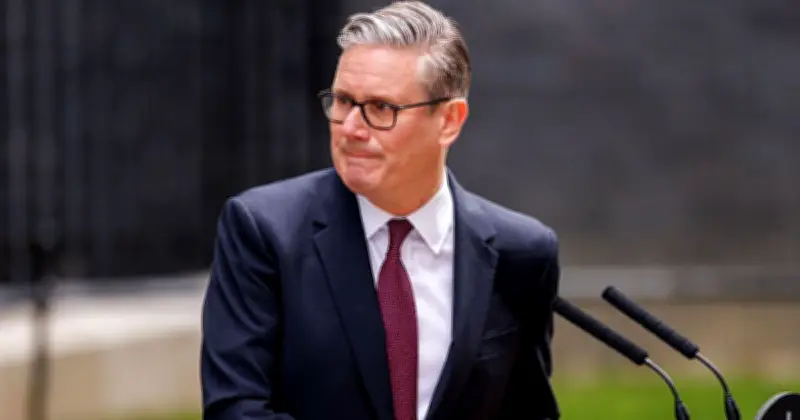
Keir Starmer has risked Britain's first line of defence by cutting overseas aid, warns veteran Garrath Williams. Writing for the Brit Brief, Williams argues that the £6 billion reduction in the overseas aid budget to fund defence is a false economy that will ultimately make the country less safe.
Security Begins Upstream
Williams, a veteran of both the British and Australian Armies with service in Kosovo, the Solomon Islands, and Afghanistan, stresses that Britain's security does not start at its borders but upstream in fragile regions. He explains that humanitarian action, peacekeeping, and combat operations exist on the same continuum, and early investment can prevent crises that later require costly military intervention.
"When crises are left unaddressed, they do not stay distant for long," Williams writes. "Conflict, extremism, disease, hunger and displacement spread beyond borders, driving instability, undermining security and increasing pressures that are felt here in the UK as well as overseas."
Veterans' Letter to the Prime Minister
Williams recently joined over 50 other veterans in signing a letter to the outgoing Prime Minister, warning that cutting £6 billion from Britain's overseas aid budget to fund defence is a false economy. The letter stated: "Acting early is both a moral duty and a strategic necessity. It reduces the chance that problems deepen to the point where military intervention becomes the only option."
The veterans emphasised that well-targeted aid is Britain's first line of defence, not charity. Decades of British investment in development, soft power, and conflict prevention have made the country safer. When conflict is contained upstream, it does not become a military operation downstream, and a stabilised fragile state does not become a refugee crisis on UK shores.
Government Response Falls Short
The government eventually responded to the veterans' letter, signed by Rt Hon Baroness Chapman, Minister of State for International Development and Africa. However, Williams notes that the reply failed to address many of the points raised. While expressing gratitude for their service, the letter offered little recognition of the veterans' experience and did not grasp that the impacts of overseas development aid are as important at home as abroad.
Williams calls on the new leadership, possibly Andy Burnham, to make a better-informed decision and not force a choice between defence and development. He argues that military leaders, diplomats, and humanitarians should not compete against each other.
Conclusion: A Strategic Necessity
Williams concludes that if the essential combination of defence and overseas aid spending is dismantled, the country will ultimately pay for it in a different way. "If you fund defence by cutting international development, you will spend more in the long term," he warns.
Garrath Williams served for 17 years in the British and Australian Armies. He is Co-Founder of Veterans Can… a community interest company that celebrates the positive impact veterans have on society, and is convenor of the Veterans’ Alliance for International Aid.




