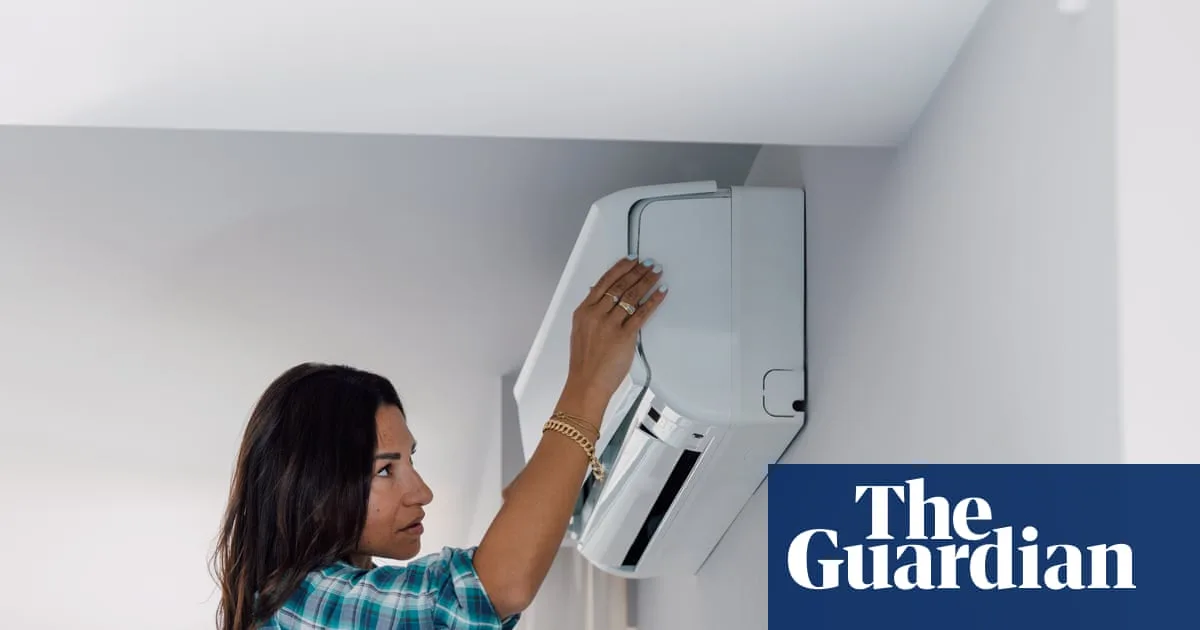
Should You Get Air Conditioning in UK? Green Options Explained

As summers become increasingly hot, the number of British homes with air conditioning has doubled to about 4 million compared to three years ago. This surge raises important questions about necessity, environmental impact, and sustainable options.

Do I Need Air Conditioning in the UK?

Most British homes are not designed for extreme heat. During a recent heatwave, software developer Jon Connorton monitored temperatures in his east Hampshire terrace house, where some rooms approached 40C. He uses a portable air conditioner only during emergencies and when his solar panels can cover the power demand. However, he still feels conflicted about its environmental impact.

The government's climate advisers estimate that with 2C of global warming, about 22% of British homes would require active cooling. Yet air conditioners are energy-intensive, potentially threatening net-zero goals. Nicole Miranda, a sustainable cooling researcher at Oxford University, approves of pairing AC with solar electricity but urges caution.

Wide Pickt banner — collaborative shopping lists app for Telegram, phone mockup with grocery list

Can Air Conditioning Be Green?

According to the Energy Saving Trust, portable AC units produce about 4.87kg of CO2 per eight hours of summer use—equivalent to driving 18 miles. To reduce emissions, consider running AC during peak solar hours when renewable energy is abundant, pre-cooling rooms before evening demand peaks, or using a home battery charged from renewables.

Andrew Sissons from Nesta advises against guilt, noting that many use AC only as a last resort. Natalie Mathie of Uswitch points out that AC powered purely by grid electricity won't be truly green until the grid runs entirely on renewables. She recommends heat pumps, which can produce three units of cooling for every unit of electricity used.

What Kind of Air Conditioning Should I Get?

Portable units are less efficient because they lower indoor air pressure, drawing warm air back in. Built-in units, while more efficient, cost about £750 plus £1,150 installation for a 12,000 BTU model, and running costs are nearly triple those of portable versions. Air-to-air heat pumps, which provide both heating and cooling, are the most eco-friendly option. The government offers a £2,500 grant for replacing fossil fuel heating with such systems in England and Wales.

Alternative Cooling Methods

Passive measures like shading windows, natural ventilation at night, green roofs, and insulation can reduce heat gain and AC demand. Nicole Miranda suggests using wet towels with fans as a low-energy alternative. Fans cost only 15p-31p per 24 hours to run, compared to £5 for a portable AC unit, and produce minimal carbon emissions. A 2021 study found fans alone were as effective as AC in preventing heat stress during past hot days.

As Connorton considers a more efficient AC for increasingly frequent hot summers, he reflects on the changing climate. The key is to balance comfort with sustainability, using AC judiciously and exploring greener technologies.

Pickt after-article banner — collaborative shopping lists app with family illustration




