
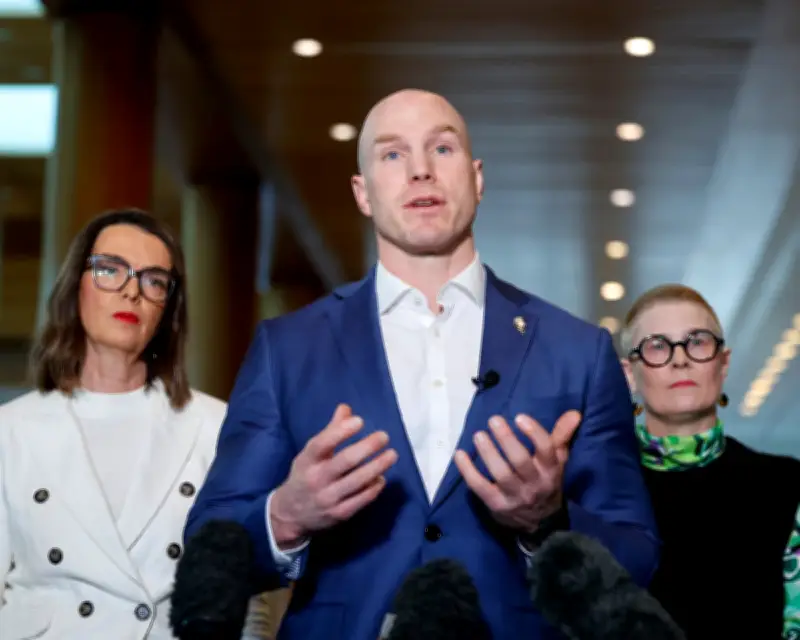
The Australian Senate has passed legislation to restore human oversight to an algorithm-based aged care funding tool that has been widely criticised for under-assessing elderly Australians' care needs. The bill, co-sponsored by the Coalition, the Greens, and independent senator David Pocock, aims to reinstate the discretion of assessors to make professional determinations about care. It now moves to the House of Representatives for approval.
Background of the Integrated Assessment Tool
The Integrated Assessment Tool (IAT), introduced in November, is used to determine the level of home support funding and care for elderly individuals. However, as reported by Guardian Australia, the algorithm frequently under-assesses people, leaving them without adequate care. Expert assessors were explicitly prohibited from overriding the tool when it made incorrect assessments.
The tool has triggered hundreds of complaints to aged care advocacy services and calls for internal reviews, which can take months. The Commonwealth Ombudsman has launched an investigation, and the Australian Human Rights Commission has raised concerns.
Government's Response and Proposed Changes
Aged Care Minister Sam Rae told ABC Radio National that the government would allow human override in “extenuating circumstances,” but this would likely cover fewer cases than the Senate-passed bill. Rae stated, “We’re creating an additional option here where, if in the assessment organisation’s clinical view, the needs of the older person aren’t catered for through the tool, then they have this option to escalate that to the system governor.” It remains unclear how long the escalation and review process will take.
Rae previously defended the IAT but acknowledged, “In some limited circumstances, people’s complex circumstances don’t necessarily fit neatly into a framework. And in those small number of circumstances, we want the system governor to be able to make the necessary decisions.”
Criticism from Senators and Advocates
Greens Senator Penny Allman-Payne criticised the government’s proposal as insufficient, saying it would only allow human override in outlier cases. She noted that “thousands” of cases have been affected by incorrect assessments and accused the government of underestimating the problem. “This government clearly does not understand the consequences of their own policy,” she said during debate.
Independent Senator David Pocock described the government’s announcement as an “eleventh-hour” move made to avoid losing a Senate vote. He told Guardian Australia, “If this change simply creates a new escalation pathway to the department after the algorithm gets it wrong, I struggle to see how it will materially address the concerns that have been raised.” He also pointed out that the government has yet to implement the robodebt royal commission’s recommendations for safeguards on algorithmic decision-making.
Impact and Next Steps
The legislation passed by the Senate would protect assessors’ professional discretion, but it requires approval from the House of Representatives to become law. The outgoing Inspector General for Aged Care, Natalie Siegel-Brown, criticised the government’s reforms, stating that aged care is now “the outlier” where clinical judgment informs data entry but not the decision. The debate continues over the balance between efficiency and human oversight in Australia’s aged care system.




