Premium Cabins' Environmental Cost Exposed in New Aviation Study
Air travel represents one of the most challenging sectors to decarbonise globally, with passenger numbers continuing to rise despite climate concerns. While electric aircraft and sustainable aviation fuels remain distant prospects for meaningful emissions reduction, groundbreaking research reveals a more immediate solution lies in operational efficiency improvements.
New analysis conducted by University of Oxford researchers demonstrates that aviation could dramatically reduce its climate impact simply by using existing aircraft more effectively. The study, examining flight routes, airlines, aircraft models and airports worldwide, suggests cabin layout changes alone could slash emissions by up to half.
The Efficiency Gap in Global Aviation
From 1980 to 2019, commercial aircraft seat occupancy increased from 63% to 82%, driven by airlines' commercial incentives to maximise revenue. However, researchers found enormous variability in carbon efficiency across different flight operations, with some routes emitting over 800 grams of CO₂ per passenger-kilometre while others manage less than 50 grams.

"This staggering variability reveals substantial potential for emissions reduction if the industry could achieve efficiency levels comparable to the best-performing routes we analysed," explained the research team. The study identified the United States, China, Germany and Japan as having particularly inefficient flight operations, while Brazil, India and southeast Asia demonstrated better performance on high-volume routes.
Premium Seating's Disproportionate Climate Impact
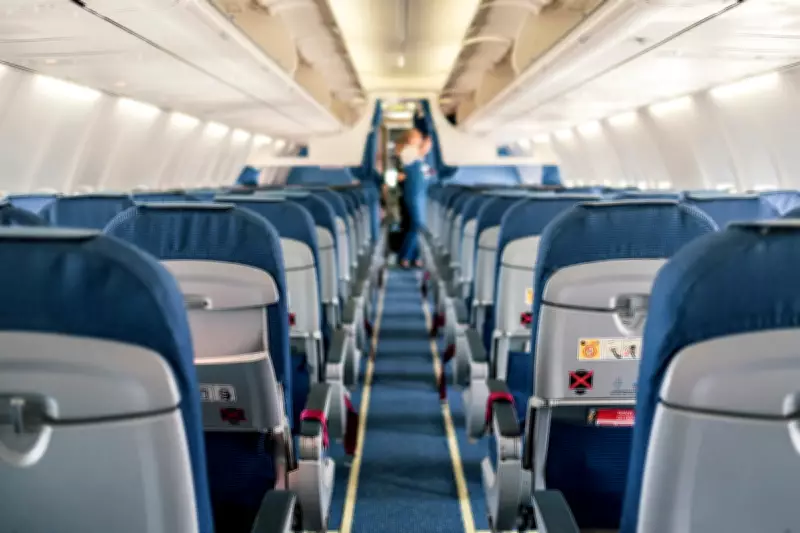
The research highlights how business and first class seating arrangements significantly contribute to aviation emissions. Premium cabin seats can be up to five times more carbon-intensive than economy seating due to their substantial space requirements per passenger.
Budget airlines demonstrate superior efficiency by maximising passenger capacity and generating revenue through ancillary services like baggage fees and food purchases, which contribute minimally to flight emissions. The study found that operating all aircraft at manufacturers' maximum seating capacity with all-economy layouts could reduce global aviation emissions by between 26% and 57%.
"There are already dramatic differences between airlines," noted researchers. "Some configure their Boeing 777-300 ERs with over 400 economy seats, while others install as few as 200, despite a maximum capacity of 550 seats."
Three Pathways to Aviation Efficiency
The research modelled three hypothetical scenarios to illustrate operational improvements' potential impact:
- Increased Load Factors: Raising average passenger load from 80% to 95% would reduce emissions by 16% through fewer required flights. Researchers suggest emissions-linked airport charges or fuel taxes could incentivise further gains.
- Modern Aircraft Adoption: Exclusive use of the most efficient aircraft models (Boeing 787-9 and Airbus A321neo) could save between 27% and 34% of global aviation emissions. While aircraft replacement faces practical constraints, policy measures could accelerate adoption.
- All-Economy Configuration: Eliminating premium cabins entirely represents the most dramatic efficiency improvement, potentially cutting emissions by more than half through maximised seating capacity.
Addressing Travel Inequality
The findings underscore how aviation emissions reflect broader travel inequality between occasional economy passengers and frequent premium-class travellers. Aviation contributes approximately 2%-3% of global CO₂ emissions, but its total climate impact reaches about 4% when including secondary effects like condensation trails that trap atmospheric heat.
"This impact is dominated by affluent individuals flying frequently, often long-haul in business and first class or via private aviation," the research indicates. While premium travellers might complain about economy class inconveniences, researchers suggest this discomfort could create stronger incentives to reduce non-essential journeys.

The study also reveals that newer aircraft models like the Boeing 787 Dreamliner and Airbus 320neo variants average less than 65 grams of CO₂ per passenger-kilometre, though their adoption remains limited by typical 25-year aircraft service lives. Long-haul flights generally prove more efficient than shorter routes due to single take-off emissions and larger aircraft deployment.
As global aviation continues grappling with its climate responsibilities, this research provides compelling evidence that operational changes could deliver substantial emissions reductions long before technological breakthroughs in propulsion systems or alternative fuels become commercially viable.