Exploring the Frozen Depths: Scientists Dive Beneath Polar Ice
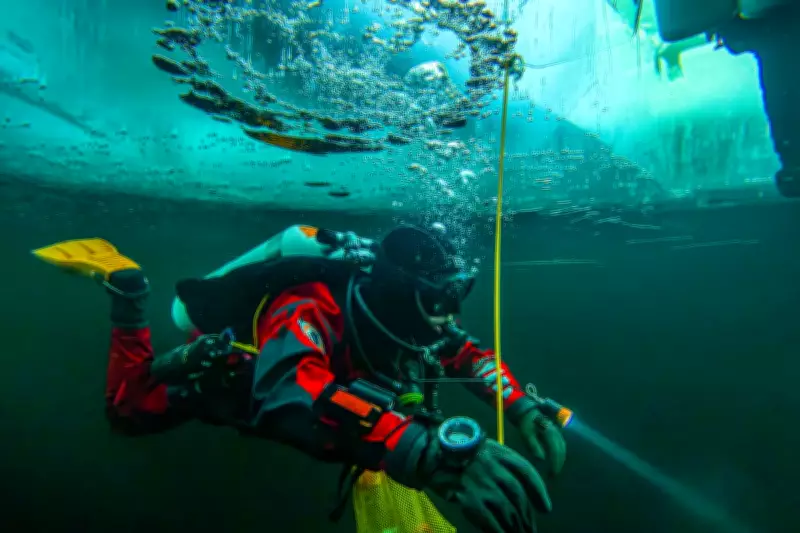
Beneath the thick, crackling ice of remote polar regions lies a hidden world rarely witnessed by human eyes. Diver Daan Jacobs recently surfaced from an 8-metre descent through a hole carved into a frozen Finnish lake, emerging from an environment where sunlight filters through Arctic ice and fish navigate submerged rock formations. This extraordinary dive was part of a growing scientific effort to understand what happens beneath polar ice as climate change accelerates.
The Urgent Need for Polar Research
The Arctic is warming at an alarming rate—four times faster than the rest of the planet. This rapid warming impacts global weather patterns and threatens species like polar bears, which rely on sea ice for hunting. Meanwhile, in Antarctica, melting ice sheets contribute to sea level rise and disrupt delicate ocean ecosystems. Scientists urgently need to study what remains beneath both Arctic and Antarctic ice to understand how climate change affects the unique flora and fauna that survive in these extreme environments.
"Because it is melting so fast, we need to have more people deployed there—more science to be done—to understand better what happens," explained Erik Wurz, a marine biologist and scientific diving instructor. "We have to do more and we need to be fast to save this unique ecosystem in the Arctic, but also the Antarctic."

Specialized Training for Extreme Conditions
The Finnish Scientific Diving Academy's Polar Scientific Diving class trains the next generation of researchers to work in these challenging environments. The program, which began in 2024 and now offers two sessions per year, drills experienced divers on a frozen lake at the University of Helsinki's Kilpisjärvi Biological Station. Participants range from marine biologists and scientists to skilled recreational divers and documentary filmmakers.
Ruari Buijs, a marine biology student at England's University of Plymouth, enrolled in the course to become more employable for Antarctic research. "I thought this would be a very good stepping stone toward that goal," he said. Meanwhile, Caroline Chen, a scientific diver from Germany, sees the training as essential for designing future experiments in polar conditions.
The Human Element in Polar Research
In an age increasingly dominated by artificial intelligence and robotics, human divers remain crucial for delicate polar research. British Antarctic Survey marine biologist Simon Morley emphasized that dragging nets across seafloors would destroy habitats, while remotely operated vehicles can typically collect only one specimen at a time. "A diver can go down and pick up 12 urchins, put them in a bag and not affect the rest of the system," Morley noted.
The training goes beyond standard scuba skills. Divers must learn to navigate beneath ice nearly a meter thick in water temperatures just above freezing. Topside support teams face their own challenges, operating safety equipment in frigid air temperatures while fending off frostbite risks. Everyone must master emergency procedures, including how to locate the ice hole for surfacing after 45-minute dives.
The Underwater Experience
Despite the extreme conditions, divers describe breathtaking experiences beneath the ice. During recent sessions, participants dove beneath 80-centimeter-thick ice, observing fish along sea floors and watching sunlight stream through the frozen surface. "It looks insane from the bottom up," Chen reported. "It changes all the time, like the Northern Lights."
Buijs noted that while covered body parts remain protected from the cold, exposed areas like lips become numb. "You kind of get Botox lips a little bit," he joked about the temporary effect.
With only a few hundred people worldwide possessing both specialized diving skills and scientific backgrounds for polar research, programs like the Finnish Scientific Diving Academy's are critical. As Jacobs summarized after his dive: "The view is beautiful"—but more importantly, understanding what happens beneath polar ice has never been more urgent for our warming planet.