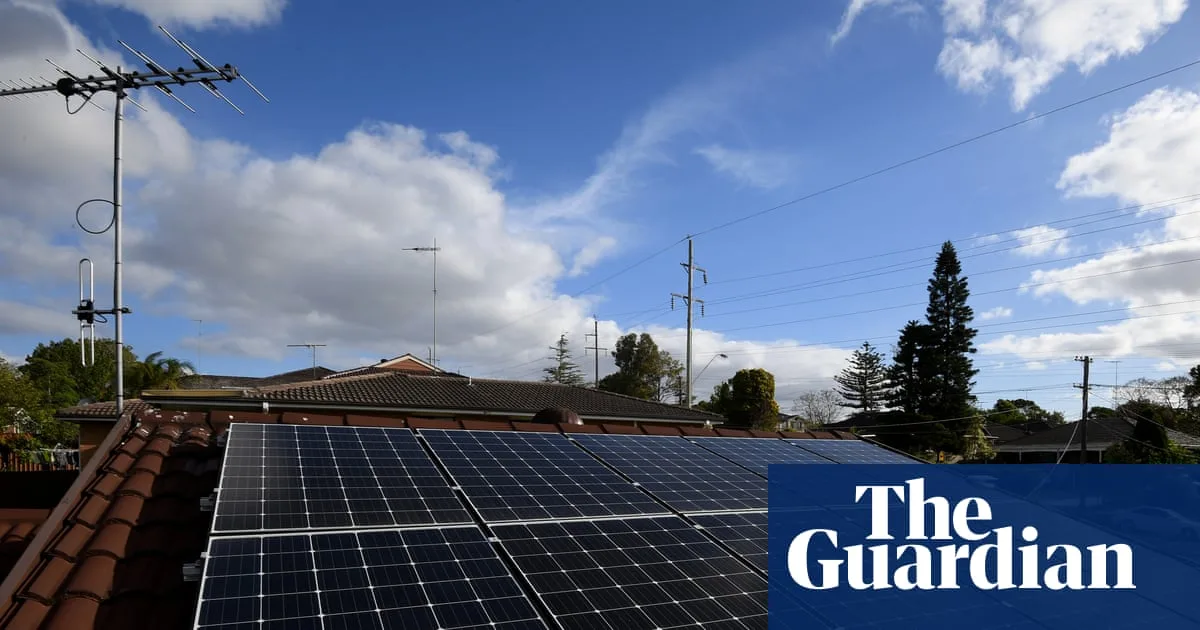
Renewable Energy and Batteries Hit Records as Australia's Power Demand Surges

Across the national electricity market, renewable energy provided 46.5% of all generation during the first three months of the year, setting a new record for that period. Hot weather and the growing energy needs of data centres pushed Australia's electricity demand to unprecedented levels, but the increasing capacity of batteries helped keep wholesale prices in check.

Record Demand and the Role of Rooftop Solar

According to the Australian Energy Market Operator (Aemo), electricity demand from households, businesses, and industry reached record levels of 25 gigawatts (GW) in the first quarter of 2026, a 1.2% increase compared to the same quarter in the previous year. This growth was largely offset by record output from rooftop solar installations across the grid. However, in New South Wales, where data centre demand surged by 18% in one year, grid electricity demand still grew by 1.8% despite the rise in rooftop solar. Previous Aemo forecasts have indicated that data centre power demand could triple within five years, potentially surpassing the energy used by electric vehicles by 2030.

Victoria and Heatwaves

Grid demand also increased in Victoria, driven by a near doubling of data centre demand, as reported in Aemo's quarterly report. The state set a new record for all-time maximum power demand on 27 January, when temperatures exceeded 43 degrees Celsius in parts of Melbourne during an extreme heatwave. Two severe heatwaves in January led to higher cooling requirements across most cities, particularly in Adelaide, where demand for air conditioning more than doubled compared to 2025 levels.

Wide Pickt banner — collaborative shopping lists app for Telegram, phone mockup with grocery list

Renewable Generation and Battery Storage

Across the national electricity market, which supplies the eastern states and South Australia, renewable energy accounted for 46.5% of total generation—a new high for the first quarter. Batteries played a crucial role, more than tripling their daytime-to-evening energy shifting capabilities. This was enabled by the addition of 4,445 megawatts (MW) of large-scale battery capacity over the past 12 months, more than doubling the total installed capacity.

Violette Mouchaileh, Aemo's executive general manager of policy, noted that this significant increase in large-scale and household battery capacity is transforming how electricity is produced, consumed, and priced throughout the day. "Grid-scale batteries are increasingly absorbing excess renewable energy during the day and shifting it into the market during evening peaks, helping moderate prices during high-demand periods," she said. By reducing reliance on gas and hydro at peak times, batteries also contributed to a 12% decrease in average wholesale electricity prices compared to the first quarter of 2025.

Expert Insights

Dr Dylan McConnell, an energy systems researcher at the University of New South Wales, described batteries as "one of the bright spots of the energy transition at the moment." He highlighted that a significant amount of capacity has come online in the last 12 months, and its impact is now evident, with batteries significantly contributing to peak evening demand and displacing gas generation. According to the Aemo report, gas generation fell to its lowest level for any quarter since 1999, almost dating back to the beginning of the national electricity market. Gas generation was down 24% compared to the same quarter last year, and coal-fired generation also declined.

Pickt after-article banner — collaborative shopping lists app with family illustration




