
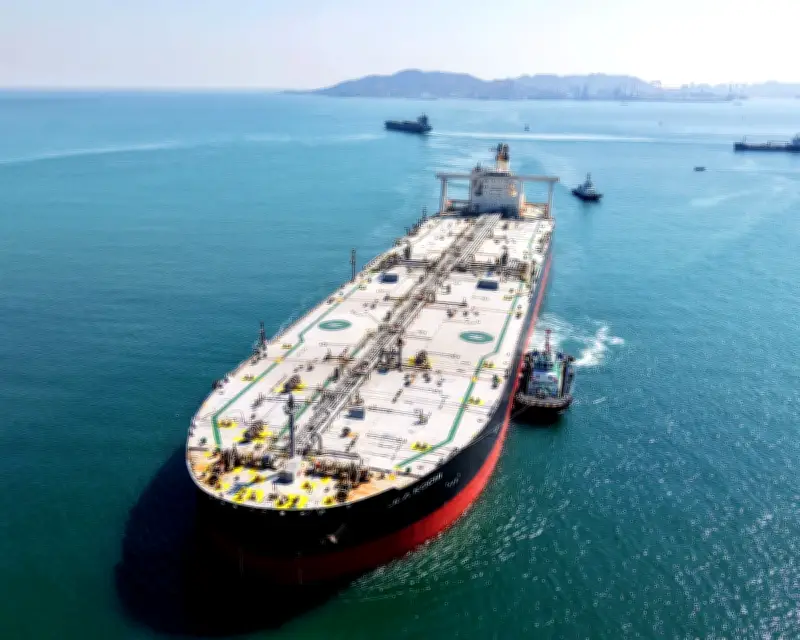
Oil prices fell to a three-month low and stock markets rallied amid fresh hopes that a US-Iran peace deal could resolve the greatest energy supply crisis in market history. The price of Brent crude dropped 5% to below $83 per barrel as the new trading week began, with optimism that the Strait of Hormuz could reopen shortly, restoring Gulf oil exports. Wholesale gas prices in Europe fell 6%.
Trump Announces Deal
US President Donald Trump declared on Sunday that a deal was "now complete," despite recent Israeli airstrikes on Beirut that had threatened to undermine sensitive talks. He wrote on social media: "I hereby fully authorize the toll free opening of the Strait of Hormuz, and, simultaneously herewith, authorize the immediate removal of the United States Naval blockade. Ships of the World, start your engines. Let the oil flow!" An hour later, he clarified that the strait would open after the peace deal was signed on Friday and that "for purposes of mine removal, oil will flow on both ends again for the Region, and the World!"
Unclear Details
Many details of the agreement remain unclear, notably the exact timing of the reopening, who will oversee safe passage, and whether conditions will apply. Iranian authorities have said there would be a 60-day negotiating period for a final deal addressing wider issues such as Tehran's nuclear programme and sanctions relief.
Oil Price Decline
The benchmark international oil price extended falls recorded on Friday to just over $82 a barrel, its lowest since March 10. Brent crude was below $73 at the outbreak of the war in late February. The price began tumbling late last week from $93 on Thursday to close at $87.50 on Friday after Trump indicated a peace deal was near.
Stock Market Rally
Global stock markets rallied on Monday. In Europe, the UK's FTSE 100 opened up 0.8% before easing to broadly flat, while France's Cac 40 and Germany's Dax rose just over 1%. Shares in oil companies like BP and Shell fell sharply. In Asia, Japan's Nikkei and South Korea's Kospi jumped 5%, while China's CSI300 rose 1.9%.
Secret US Military Assistance
Trump also claimed the US military had been secretly helping to move millions of barrels of oil a day through the strait in recent weeks to ease global market pressure. Oil prices remained lower than expected throughout the Iran war, which halted Gulf oil exports via the strait in early March, effectively removing 20 million barrels a day from the market.
Rerouting and Dark Tankers
Gulf producers rerouted about 5 million barrels a day via pipelines to alternative export hubs, while another 2 million barrels a day may have been moved with US military help using "dark tankers" that shuttle undetected to vessels in the Gulf of Oman. However, many ships remain stuck in the Strait of Hormuz. The Japanese Shipowners' Association reported 38 Japanese-linked vessels still stranded.
Emergency Releases and Demand Cuts
Record levels of emergency crude and fuel have been released by International Energy Agency members at about 2.5 million barrels a day. The supply shortfall has also been narrowed by demand cuts: China is estimated to have reduced imports by 4 million barrels a day to decade lows, drawing on high inventories. Globally, demand may have fallen by 3 to 4 million barrels a day as Asian refineries cut activity.
Analyst Outlook
Tony Sycamore, an analyst at IG, said countries would use a reopening to replenish depleted stockpiles and strategic reserves. He noted that negotiations are complex, particularly around nuclear issues, making it "hard to see crude falling much further from here in the near term."




