
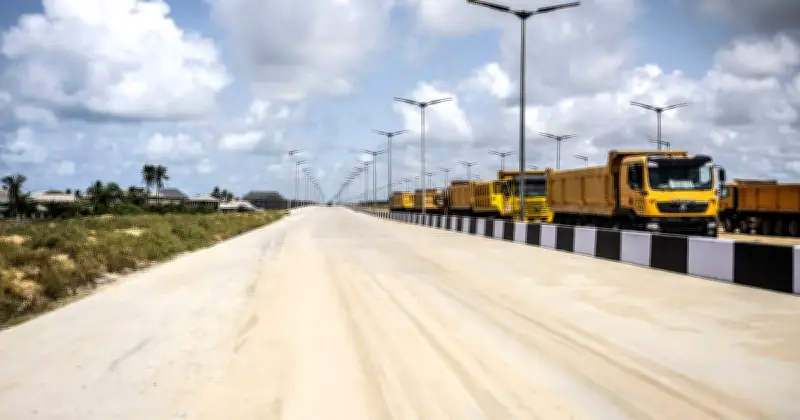
Africa's massive new coastal road, stretching over 400 miles and costing an estimated £8.5 billion, is under construction along the Atlantic coastline, despite mounting environmental concerns. The 430-mile motorway will link Nigeria's sprawling megacity Lagos with Calabar, near the border with Cameroon.
Project Overview
The ambitious project is the brainchild of Nigerian President Bola Tinubu, who has promised to "revolutionise" the nation's transport network and boost tourism. At a ceremony marking the opening of the first stretch, Tinubu declared: "We have a road that will outlive all of us here." Construction is expected to be completed by 2028.
Environmental Concerns
Environmental groups have raised serious alarms, warning that the highway will be highly vulnerable to predicted sea level rises. Nnimmo Bassey, former chairman of Friends of the Earth International, described the Lagos–Calabar Coastal Highway as "the very embodiment of climate denial." He noted that sea levels along the Nigerian coastline are rising rapidly, making the project extremely risky.
Nigeria faces a particularly acute threat from rising seas. The fishing port of Aiyetoro in Ondo State lost 50 buildings in a single ocean surge in 2024 and is believed to have lost about 80% of its land to the encroaching sea. Its population has plummeted from 30,000 in 2006 to roughly 5,000 today.
Economic Ambitions
Despite these warnings, President Tinubu remains resolute, placing the road at the heart of his re-election campaign. The road had languished in planning for nearly 50 years, but Tinubu and his allies see it as a crucial milestone for Nigeria's economic progress. Orji Uchenna Orji, an adviser to the public works minister, said: "The Lagos–Calabar Coastal Highway will be one of the greatest omens in the political and economic trajectory of this nation. It will stimulate economic development and the transportation ecosystem."
Funding and Construction
The government will contribute 30% of the road's $12 billion budget, with contractor Hitech Construction Company Ltd covering the rest. Hitech will recoup its investment by collecting tolls for 15 years. Hitech is also behind Eko Atlantic, a $6 billion futuristic megacity near Lagos, built on reclaimed land and protected by a five-mile concrete barrier called the Great Wall of Lagos. The firm plans to safeguard the new road with similar seawalls, mangrove belts, and dunes to reduce erosion and absorb carbon.
Environmental Impact
Nigeria's natural environment has already been degraded by oil and gas extraction, and the super-highway threatens further harm. In Akwa Ibom state, the road will cut through Stubbs Creek Forest, a protected area home to endangered species. According to the Nigerian Conservation Foundation, the country has lost nearly 90% of its forest cover in the past 30 years. A 2022 study found that 89% of the 180 km of coastline in Lagos State retreated by an average of 2.80 metres per year between 1973 and 2019.
The environmental impact assessment for the Lagos section, conducted after construction began, claims that a 0.5-metre sea level rise would not affect the project. However, current IPCC projections indicate that warming will likely exceed 3°C by 2100, leading to a sea level rise of more than 0.6 metres.




