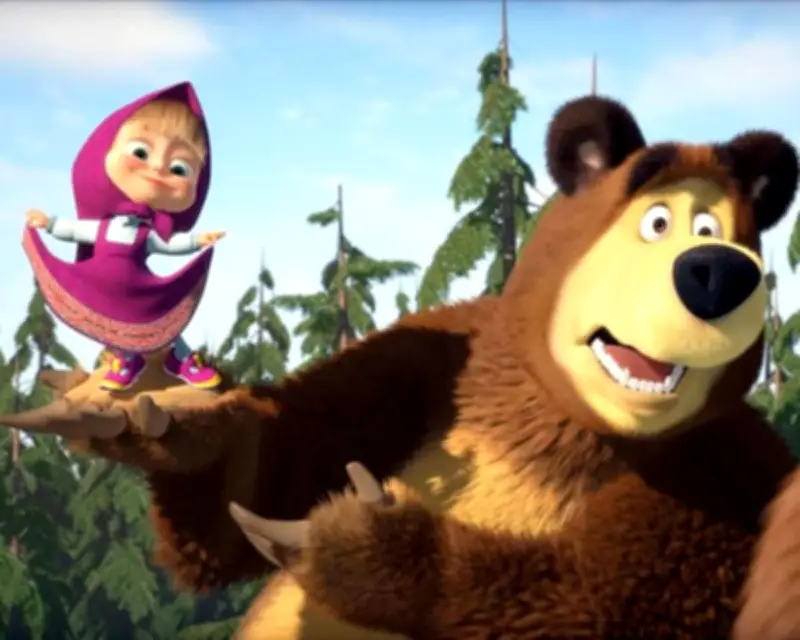
A cross-party group of more than 50 UK MPs has written to Culture Secretary Lisa Nandy demanding urgent action to end the broadcast of the Russian animated series Masha and the Bear on streaming platforms including Netflix and ITVX. The MPs allege the preschool cartoon contains unsubtle propaganda content that normalises Soviet military iconography for a global audience of young children.
Allegations of Propaganda
The letter, led by Liberal Democrat MP Tom Gordon, highlights specific episodes where the four-year-old protagonist Masha is depicted wearing a tank-crew hat and Soviet-era uniform, as well as what appears to be a Soviet border guard’s cap historically associated with the NKVD – the secret police agency responsible for mass deportations, executions and persecution of tens of millions of people. The MPs also point to a social media post from the show’s studio, Animaccord, showing Masha in similar attire with the caption: “A real army girl with a butterfly net! Who hoo, I’m in the army now!”
The MPs argue that this imagery is “actively normalising Soviet military iconography” and that British parents have a right to expect content reaching their children through licensed platforms has been subject to proper scrutiny. They cite concerns raised by Ukraine’s Center for Countering Disinformation, which described the show as “not just a cartoon, but an instrument of Russian soft power” featuring mockery of other nations’ traditions and normalisation of Soviet symbols.
Netflix Deal and ITVX Availability
Netflix recently announced it has acquired two new seasons of Masha and the Bear and extended its licensing agreement for existing seasons and spin-offs across more than 100 countries. The show is also streamed in the UK on ITVX. One episode, Recipe for Disaster, has been viewed more than 4.6 billion times on YouTube, making it one of the most popular shows of all time on the platform.
Estonia’s Minister of Foreign Affairs, Margus Tsahkna, has also voiced concerns, stating that “Masha and the Bear is part of the Kremlin’s soft power, embedding pro-Kremlin and militaristic messaging in children’s entertainment.” He noted that for many nations, Soviet symbols represent occupation, mass killings, deportations and crimes against humanity.
Animaccord’s Response
Animaccord, a Russian animation studio headquartered in Cyprus, strongly denies the allegations. Spokesperson Melanie Bonvicino said: “My client categorically rejects the false and defamatory suggestion that Masha and the Bear is associated with propaganda. For nearly two decades, Masha and the Bear has entertained families in more than 100 countries through universal themes of friendship, kindness and imagination. The series contains no political messaging, and any claim to the contrary is wholly unsupported by its content. Animaccord operates in full compliance with applicable laws. Assertions to the contrary are false, irresponsible and without evidentiary basis.”
Russian state media have ridiculed the idea that the show features propaganda. The Department for Culture, Media and Sport declined to comment, with Whitehall sources saying it is up to broadcasters what they feature as long as content stays within broadcasting rules overseen by Ofcom. ITV declined to comment, and it is understood its deal to feature the show did not involve a large fee. Netflix was contacted for comment.